our faith
Orthodox Christianity, is one of the oldest and most traditional branches of Christianity, holds a significant place in the world for a variety of reasons. Its rich history, deep theological tradition, and strong cultural influence have made it a cornerstone of global Christianity and a significant force for both spiritual and social change.
One of the key reasons why Orthodox Christianity is important to the world is its preservation of ancient Christian traditions and teachings. As the original branch of Christianity, Orthodox Christianity traces its roots back to the earliest days of the church and has maintained a continuity with these ancient traditions throughout the centuries. Its liturgical practices, theological beliefs, and spiritual disciplines are deeply rooted in the early church fathers and have been passed down from generation to generation, providing a living link to the earliest Christian communities.
Orthodox Christianity is not simply a “religion of the book,” but the living experience of the Holy Spirit within the Church. Holy Tradition includes the Scriptures, the decisions of the Ecumenical Councils, the writings of the Fathers, the Holy Liturgy, and the holy icons. It is the continuous, uninterrupted life of the Church from Pentecost to the present day.
We are part of the One Holy Catholic Apostolic Church conforms to that of the undivided Catholic Church of the first millennium of its existence. It is expressed in the Symbol of Faith of the Nicene Creed, promulgated by the Council of Nicaea in AD 325 and enlarged by the Council of Constantinople in AD 381:
"I believe in one God, the Father Almighty, maker of Heaven and earth, and of all things visible and invisible, and in one Lord, Jesus Christ, the only begotten Son of God, begotten of the Father before all ages, God of God, Light of Light, true God of true God; begotten, not made; of one essence with the Father, by Whom all things were made, who, for us men, and for our salvation, came down from Heaven, and was incarnate by the Holy Spirit and the Virgin Mary; and became man; He was crucified for us under Pontius Pilate, suffered, and was buried, and the third day He rose again, according to the Scriptures; and ascended into Heaven, and is seated at the right hand of the Father; and He shall come again with glory, to judge the living and the dead; whose Kingdom shall have no end, and in the Holy Spirit, the Lord and giver of life, Who proceed from the Father; Who with the Father and the Son together is worshipped and glorified; Who spoke by the prophets, and in One, Holy, Catholic and Apostolic Church. I acknowledge one Baptism for the remission of sins; I look for the resurrection of the dead, and the life of the world to come. Amen".
Our faith and teachings are based on Saint Gregory the Theologian teaching that upholds his teaching: “I never have and never can honour anything above the Nicene Faith, that of the Holy Fathers who met there to destroy the Arian heresy”
We believe that the source of our Faith is fully expressed in the Nicene Creed (based on Sacred Scripture and Sacred Tradition). We also believe that Sacred Scripture (the Bible), which comprises the Old Testament and the New Testament, contains God’s revelation to us, particularly that concerning His Son, Our Lord Jesus Christ, and that in matters essential to our salvation.
The foundation of the Orthodox Church faith is based on the below statements:
THE SEVEN ECUMENICAL COUNCILS
The doctrinal foundation of the Orthodox Church is based on the definitions of the Seven Holy Ecumenical Councils. These divinely inspired assemblies protected the flock from heresy, articulating the truth of the Holy Trinity and the Incarnation of the Word, Jesus Christ, who is perfect God and perfect man.
THE HOLY MYSTERIES
The grace of God is communicated to the faithful through the Holy Mysteries. Baptism incorporates us into the Body of Christ; Confirmation seals us with the Holy Spirit; the Eucharist unites us with the Body and Blood of Christ. Confession, the Priesthood, Marriage and Unction sanctify every aspect of human life.
TRADITION
The ongoing life of God’s People is called Holy Tradition. The Holy Tradition of the Old Testament is expressed in the Old Testamental part of the Bible and in the ongoing life of the People of Israel until the birth of Christ. This tradition is fulfilled, completed and transcended in the time of the Messiah and in the Christian Church.
THE BIBLE
The written record of God’s revelation is the Bible, which means the book, or the books. The Bible is also called the Holy Scriptures. Scripture as a word simply means writings.
The Bible was written over thousands of years by many different people. It is divided into two testaments or covenants. These words signify agreements, pacts, or we might say, ‘deals.’ The two basic covenants are the old and the new; each has its own scriptures. As a book, the Bible contains many different kinds of writings: law, prophecy, history, poetry, stories, aphorisms, prayers, letters and symbolical visions.
The Old Testament
The Old Testament scripture begins with the five books of the Law called the Pentateuch, which means the five books; also called the Torah, which means the Law. Sometimes these books are also called the Books of Moses since they are centered on the exodus and the Mosaic laws.
In the Old Testament there are also books of the history of Israel; books called the Wisdom books such as the Psalms, Proverbs, and the Book of Job; and books of the prophecies which carry the names of the Old Testament prophets. A prophet is one who speaks the Word of God by direct divine inspiration. Only secondarily does the word prophet mean one who foretells the future.
The Orthodox Church also numbers among the genuine books of the Old Testament the so-called apocryphal books, meaning literally the secret or hidden writings. Other Christians put these books in a secondary place or reject completely their being of divine inspiration.
The New Testament
The centre of the New Testament part of the Bible is the four gospels of Matthew, Mark, Luke, and John, who are called the four evangelists, which means those who wrote the gospels. Gospel in Greek is evangelion which means the “glad tidings” or the “good news.”
In the New Testament scripture there is also the book of the Acts of the Apostles, written by Saint Luke. There are fourteen letters called the epistles (which simply means letters) of the Apostle Paul, though perhaps some, such as the Letter to the Hebrews, were not written directly by him. Three letters are also ascribed to the apostle John; two to the apostle Peter; and one each to the apostles James and Jude. Finally there is the Book of Revelation, also called the Apocalypse, which is ascribed to Saint John as well.
For the Orthodox, the Bible is the main written source of divine doctrine since God Himself inspired its writing by His Holy Spirit (see 2 Tim 3.16 and 2 Pet 1.20). This is the doctrine of the inspiration of the Bible, namely that men inspired by God wrote the words which are truly their own human words—all words are human! —but which nevertheless may be called all together the Word of God. Thus, the Bible is the Word of God in written form because it contains not merely the thoughts and experiences of men, but the very self-revelation of God.
The centre of the Bible as the written Word of God in human form is the person of the Living Word of God in human form, Jesus Christ. All parts of the Bible are interpreted in the Orthodox Church in the light of Christ since everything in the Bible leads up to Christ and speaks about Him (Lk 24.44). This fact is symbolized in the Orthodox Church by the fact that only the book of the four gospels is enthroned on the altars of our churches and not the entire Bible. This is so because everything in the Bible is fulfilled in Christ.
THE LITURGY
When the Church, which means literally the gathering or assembly of people who are called together to perform a specific task, assembles as God’s People to worship, this gathering is called the liturgy of the Church. As a word, liturgy means the common work or action of a particular group of people for the sake of all. Thus the divine liturgy of the Christian Church means the common work of God done by the people of God.
The liturgy of the Old Testament people was the official worship in the temple of Jerusalem according to the Mosaic Law, as well as the annual feasts and fasts and the private prayers and services held by the Israelites at home or in the synagogues. Synagogues by definition are houses of gathering; they are not temples since, according to the Law, there was just the one temple in Jerusalem where the priestly worship was conducted. In the synagogues the Israelites gathered for prayer and scriptural study, preaching, and contemplation of the Word of God.
In the New Testament Church, the liturgy is centered in the person of Christ and is primarily a “christening” of the Old Testament liturgical life. The Christian Church retains the liturgical life of the Old Testament in a new and eternal perspective. Thus, the prayers of the Old Testament, the scriptures and the psalms, are read and sung in the light of Christ. The sacrifice of the Body and Blood of Christ replaces the Old Testament sacrifices in the temple. And the Lord’s Day, Sunday, replaces the old Jewish sabbath which is Saturday.
The Jewish feasts also take on new meaning in the Christian Church, with the central feast of Passover, for example, becoming the celebration of Christ’s death and resurrection; and the feast of Pentecost becoming the celebration of the coming of the Holy Spirit, which fulfils the Old Testamental Law. The Christian liturgical year is also patterned after the Old Testamental prototype.
From the foundation of the Old Testament liturgy, the Church developed its own sacramental life with baptism in the name of the Holy Trinity, chrismation, holy communion, marriage, repentance, healing, and the Churchly ministry and priesthood taking on specifically Christian forms and meaning. In addition, a great wealth of specifically Christian prayers, hymns, and blessings were developed, together with specifically Christian feasts and celebrations in remembrance of New Testamental events and Saints.
The living experience of the Christian sacramental and liturgical life is a primary source of Christian doctrine. In the liturgy of the Church, the Bible and the Holy Tradition come alive and are given to the living experience of the Christian people. Thus, through prayer and sacramental worship, men are “taught by God” as it was predicted for the messianic age (Jn 6.45).
In addition to the living experience of the liturgy, the texts of the services and sacraments provide a written source of doctrine in that they may be studied and contemplated by one who desires an understanding of Christian teachings. According to the common opinion of the Orthodox Church, the sacramental and liturgical texts—the hymns, blessings, prayers, symbols, and rituals—contain no formal errors or deformations of the Christian faith and can be trusted absolutely to reveal the genuine doctrine of the Orthodox Church. It may well be that some of the historical information contained in church feasts is inaccurate or merely symbolical, but there is no question in the Church that the doctrinal and spiritual meaning of all of the feasts is genuine and authentic and provides true experience and knowledge of God.
THE COUNCILS
As the Church progressed through history it was faced with many difficult decisions. The Church always settled difficulties and made decisions by reaching a consensus of opinion among all the believers inspired by God who were led by their appointed leaders, first the apostles and then the bishops.
The first church council in history was held in the apostolic church to decide the conditions under which the gentiles, that is, the non-Jews, could enter the Christian Church (see Acts 15). From that time on, all through history councils were held on every level of church life to make important decisions. Bishops met regularly with their priests, also called presbyters or elders, and people. It became the practice, and even the law, very early in church history that bishops in given regions should meet in councils held on a regular basis.
THE LITURGY
When the Church, which means literally the gathering or assembly of people who are called together to perform a specific task, assembles as God’s People to worship, this gathering is called the liturgy of the Church. As a word, liturgy means the common work or action of a particular group of people for the sake of all. Thus the divine liturgy of the Christian Church means the common work of God done by the people of God.
The liturgy of the Old Testament people was the official worship in the temple of Jerusalem according to the Mosaic Law, as well as the annual feasts and fasts and the private prayers and services held by the Israelites at home or in the synagogues. Synagogues by definition are houses of gathering; they are not temples since, according to the Law, there was just the one temple in Jerusalem where the priestly worship was conducted. In the synagogues the Israelites gathered for prayer and scriptural study, preaching, and contemplation of the Word of God.
In the New Testament Church the liturgy is centered in the person of Christ and is primarily a “christening” of the Old Testament liturgical life. The Christian Church retains the liturgical life of the Old Testament in a new and eternal perspective. Thus, the prayers of the Old Testament, the scriptures and the psalms, are read and sung in the light of Christ. The sacrifice of the Body and Blood of Christ replaces the Old Testament sacrifices in the temple. And the Lord’s Day, Sunday, replaces the old Jewish sabbath which is Saturday.
The Jewish feasts also take on new meaning in the Christian Church, with the central feast of Passover, for example, becoming the celebration of Christ’s death and resurrection; and the feast of Pentecost becoming the celebration of the coming of the Holy Spirit, which fulfils the Old Testamental Law. The Christian liturgical year is also patterned after the Old Testamental prototype.
From the basic foundation of the Old Testament liturgy, the Church developed its own sacramental life with baptism in the name of the Holy Trinity, chrismation, holy communion, marriage, repentance, healing, and the Churchly ministry and priesthood taking on specifically Christian forms and meaning. In addition, a great wealth of specifically Christian prayers, hymns, and blessings were developed, together with specifically Christian feasts and celebrations in remembrance of New Testamental events and Saints.
The living experience of the Christian sacramental and liturgical life is a primary source of Christian doctrine. In the liturgy of the Church, the Bible and the Holy Tradition come alive and are given to the living experience of the Christian people. Thus, through prayer and sacramental worship, men are “taught by God” as it was predicted for the messianic age (Jn 6.45).
In addition to the living experience of the liturgy, the texts of the services and sacraments provide a written source of doctrine in that they may be studied and contemplated by one who desires an understanding of Christian teachings. According to the common opinion of the Orthodox Church, the sacramental and liturgical texts—the hymns, blessings, prayers, symbols, and rituals—contain no formal errors or deformations of the Christian faith and can be trusted absolutely to reveal the genuine doctrine of the Orthodox Church. It may well be that some of the historical information contained in church feasts is inaccurate or merely symbolical, but there is no question in the Church that the doctrinal and spiritual meaning of all of the feasts is genuine and authentic and provides true experience and knowledge of God.
THE SEVEN SACRAMENTS OF THE CHURCH
The Orthodox Church recognise and affirm the Seven Sacraments of the Church:
Baptism.
Chrismation (Confirmation).
Communion (Holy Eucharist).
Holy Ordination.
Penance.
Anointing of the sick (Holy Unction of the sick and Extreme Unction for the dying).
Holy Matrimony / Marriage.
THE COUNCILS
As the Church progressed through history it was faced with many difficult decisions. The Church always settled difficulties and made decisions by reaching a consensus of opinion among all the believers inspired by God who were led by their appointed leaders, first the apostles and then the bishops.
The first Church council in history was held in the apostolic church to decide the conditions under which the gentiles, that is, the non-Jews, could enter the Christian Church (see Acts 15). From that time on, all through history councils were held on every level of church life to make important decisions. Bishops met regularly with their priests, also called presbyters or elders, and people. It became the practice, and even the law, very early in church history that bishops in given regions should meet in councils held on a regular basis.
The dogmatic definitions (dogma means official teaching) and the canon laws of the ecumenical councils are understood to be inspired by God and to be expressive of His will for men. Thus, they are essential sources of Orthodox Christian doctrine.
The Seven Ecumenical Councils
Nicea 1 - 325
Formulated the First Part of the Creed, defining the divinity of the Son of Go
Constantinople I - 381
Formulated the Second Part of the Creed, defining the divinity of the Holy Spirit
Ephesus - 431
Defined Christ as the Incarnate Word of God and Mary as Theotokos
Chalcedon -451
Defined Christ as Perfect God and Perfect Man in One Person
Reconfirmed the Doctrines of the Trinity and of Christ
Constantinople III - 680
Affirmed the True Humanity of Jesus by insisting upon the reality of His human will and action
Nicea II - 787
Affirmed the propriety of icons as genuine expressions of the Christian Faith
Besides the seven ecumenical councils, there are other local church councils whose decisions have also received the approval of all Orthodox Churches in the world, and so are considered to be genuine expressions of the Orthodox faith and life. The decisions of these councils are mostly of a moral or structural character. Nevertheless, they too reveal the teaching of the Orthodox Church.
THE FATHERS
There are in the Church several Saints who were theologians and spiritual teachers who defended and explained the doctrines of the Christian Faith. These saints are called the holy fathers of the Church and their teachings are called the patristic teachings (patristic is from the Greek word for father).
Some of the Holy Fathers are called apologists because they defended the Christian teachings against those outside the Church who ridiculed the faith. Their writings are called apologies which means “answers” or “defenses.”
Others of the Holy Fathers defended the Christian faith against certain members of the Church who deformed the truth and life of Christianity by choosing certain parts of the Christian revelation and doctrine while denying other aspects. Those who deformed the Christian faith in this way and thereby destroyed the integrity of the Christian Church are called the heretics, and their doctrines are called heresies. By definition heresy means “choice,” and a heretic is one who chooses what he wants according to his own ideas and opinions, selecting certain parts of the Christian Tradition while rejecting others. By his actions, a heretic not only destroys the fullness of the Christian truth but also divides the life of the Church and causes division in the community.
Generally speaking, the Orthodox tradition regards the teachers of heresies as not merely being mistaken or ignorant or misguided; it accuses them of being actively aware of their actions and therefore sinful. A person merely misguided or mistaken or teaching what he believes to be the truth without being challenged or opposed as to his possible errors is not considered to be a heretic in the true sense of the word. Many of the saints and even the holy fathers have elements in their teachings which Christians of later times have considered as being false or inaccurate. This, of course, does not make them heretics.
Not all of the holy fathers were defenders against falsehood or heresy. Some of them were simply the very positive teachers of the Christian faith, developing and explaining its meaning in a deeper and fuller way. Others were teachers of the spiritual life, giving instruction to the faithful about the meaning and method of communion with God through prayer and Christian living. Those teachers who concentrated on the struggle of spiritual life are called the ascetical fathers, asceticism being the exercise and training of the “spiritual athletes”; and those who concentrated on the way of spiritual communion with God are called the mystical fathers, mysticism being defined as the genuine, experiential union with the Divine.
All of the Holy Fathers, whether they are classified as theological, pastoral, ascetical or mystical gave their teachings from the sources of their own living Christian experience. They defended and described and explained the theological doctrines and ways of spiritual life from their own living knowledge of these realities. They blended together the brilliance of the intellect with the purity of the soul and the righteousness of life. This is what makes them the holy fathers of the Church.
The writings of the Church Fathers are not infallible, and it has even been said that in any given one of them some things could be found which could be questioned in the light of the fullness of the Tradition of the Church. Nevertheless, taken as a whole, the writings of the Fathers which are built upon the biblical and liturgical foundations of Christian faith and life have great authority within the Orthodox Church and are primary sources for the discovery of the Church’s doctrine.
The writings of some of those fathers who have received the universal approval and praise of the Church through the ages are of particular importance, such as those of Ignatius of Antioch, Irenaeus of Lyons, Athanasius of Alexandria, Basil the Great, Gregory of Nyssa, Gregory the Theologian, John Chrysostom, Cyril of Alexandria, Cyril of Jerusalem, Maximus the Confessor, John of Damascus, Photius of Constantinople, and Gregory Palamas; and those of the ascetical and spiritual fathers such as Anthony of Egypt, Macarius of Egypt, John of the Ladder, Isaac of Syria, Ephraim of Syria, Simeon the New Theologian, and others.
Sometimes it is difficult for us to read the writings of the fathers of the Church since their problems were often complicated and their manner of writing very different in style from our own. Also, most of the spiritual and ascetical writings are put in the monastic setting and must be transposed in order to be understandable and usable to those of us who are not monks or nuns. Nevertheless, it is important to read the writings of the fathers directly. One should do so slowly, a little at a time, with careful thought and consideration and without making quick and capricious conclusions. . . the same way that one would read the Bible. Among the church fathers, Saint John Chrysostom’s writings are very clear and direct and can be read by many with great profit if the proper care is given. Also, the Philokalia—an anthology of spiritual writings—exists in English, at least in part, and with proper care, it can be helpful to a mature Christian in search of deeper insights into the spiritual life.
THE SAINTS
The doctrine of the Church comes alive in the lives of the true believers, the saints. The saints are those who literally share the holiness of God. “Be holy, for I your God am holy” (Lev 11.44; 1 Pet 1.16). The lives of the Saints bear witness to the authenticity and truth of the Christian gospel, the sure gift of God’s holiness to men.
In the Church there are different classifications of saints. In addition to the holy fathers who are quite specifically glorified for their teaching, there are several classifications of the various types of holy people according to the particular aspects of their holiness.
Thus, there are the apostles who are sent to proclaim the Christian faith, the evangelists who specifically announce and even write down the gospels, the prophets who are directly inspired to speak God’s word to men. There are the confessors who suffer for the faith and the martyrs who die for it. There are the so-called “holy ones,” the saints from among the monks and nuns; and the “righteous,” those from among the lay people.
In addition, the church service books have a special title for saints from among the ordained clergy and another special title for the holy rulers and statesmen. Also, there is the strange classification of the fools for Christ’s sake. These are they who through their total disregard for the things that people consider so necessary—clothes, food, money, houses, security, public reputation, etc.—have been able to witness without compromise to the Christian Gospel of the Kingdom of Heaven. They take their name from the sentence of the Apostle Paul: “We are fools for Christ’s sake” (1 Cor 4.10; 3.18).
CANONS
There are canon laws of Ecumenical Councils, of provincial and local councils, and of individual church fathers which have been received by the entire Orthodox Church as normative for Christian doctrine and practice. As a word canon means literally rule or norm or measure of judging. In this sense the canon laws are not positive laws in the juridical sense and cannot be easily identified with laws as understood and operative in human jurisprudence.
The canons of the Church are distinguished first between those of a dogmatic or doctrinal nature and those of a practical, ethical, or structural character. They are then further distinguished between those which may be changed and altered and those which are unchangeable and may not be altered under any conditions.
The dogmatic canons are those council definitions which speak about an article of the Christian faith; for example, the nature and person of Jesus Christ. Although such canons may be explained and developed in new and different words, particularly as the Church Tradition grows and moves through time, their essential meaning remains eternal and unchanging.
Some canons of a moral and ethical character also belong to those which cannot be changed. These are the moral canons whose meaning is absolute and eternal and whose violation can in no way be justified. The canons which forbid the sale of Church sacraments are of this kind.
There are, in addition, canons of a quite practical nature which may be changed and which, in fact, have been changed in the course of the life of the Church. There are also those which may be changed but which remain in force since the Church has shown the desire to retain them. An example of the former type is the canon which requires the priests of the church to be ordained to office only after reaching thirty years of age. It might be said that although this type of canon remains normative and does set a certain ideal which theoretically may still be of value, the needs of the Church have led to its violation in actual life. The canon which requires that the bishops of the Church be unmarried is of the latter type.
Always clear which canons express essential marks of Christian life and which do not. There are often periods of controversy over certain canons as to their applicability in given times and conditions. These factors, however, should not lead the members of the Church to dismay or to the temptation either to enforce all canons blindly with identical force and value or to dismiss all the canons as meaningless and insignificant.
In the first place, the canons are “of the Church” and therefore cannot possibly be understood as “positive laws” in a juridical sense; secondly, the canons are certainly not exhaustive, and do not cover every possible aspect of Church faith and life; thirdly, the canons were produced for the most part in response to some particular dogmatic or moral question or deviation in the Church life and so usually bear the marks of some particular controversy in history which has conditioned not merely their particular formulation, but indeed their very existence.
Taken by themselves, the canon laws of the Church can be misleading and frustrating, and therefore superficial people will say “either enforce them all or discard them completely.” But taken within the wholeness of Orthodox life—theological, historical, canonical, and spiritual—these canons do assume their proper place and purpose and show themselves to be a rich source for discovering the living Truth of God in the Church. In viewing the canons of the Church, the key factors are Christian knowledge and wisdom, which are borne from technical study and spiritual depth. There is no other “key” to their usage; and any other way would be according to the Orthodox faith both unorthodox and unchristian.
CHURCH ART
The Orthodox Church has a rich tradition of iconography as well as other church arts: music, architecture, sculpture, needlework, poetry, etc. This artistic tradition is based on the Orthodox Christian doctrine of human creativity rooted in God’s love for man and the world in creation.
Because man is created in the image and likeness of God, and because God so loved man and the world as to create, save, and glorify them by His own coming in Christ and the Holy Spirit, the artistic expressions of man and the blessings and inspirations of God merge into a holy artistic creativity which truly expresses the deepest truths of the Christian vision of God, man, and nature.
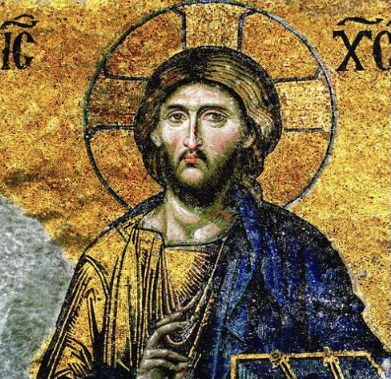
The icon is Orthodoxy’s highest artistic achievement. It is a gospel proclamation, a doctrinal teaching, and a spiritual inspiration in colours and lines.
The traditional Orthodox icon is not a holy picture. It is not a pictorial portrayal of some Christian saint or event in a “photocopy” way. It is, on the contrary, the expression of the eternal and divine reality, significance, and purpose of the given person or event depicted. In the gracious freedom of the divine inspiration, the icon depicts its subject as at the same time both human and yet “full of God,” earthly and yet heavenly, physical and yet spiritual, “bearing the cross” and yet full of grace, light, peace, and joy.
In this way the icon expresses a deeper “realism” than that which would be shown in the simple reproduction of the physical externals of the historic person or happening. Thus, in their own unique way the various types of Orthodox icons, through their form and style and manner of depiction as well as through their actual contents and use in the Church, are an inexhaustible source of revelation of the Orthodox doctrine and faith.
Musical expression may be added to the icon as a source of discovering the Orthodox Christian worldview. Here, however, there is greater difficulty because of the loss in recent years of the liturgical and spiritual meaning of music in the Church. Just as the theological meaning of the traditional Orthodox icon is being rediscovered, so is the traditional doctrinal significance of Orthodox music. The process in the latter case, however, is much slower, much more difficult, and much less evident to the average person.
The traditional Orthodox architecture also expresses the doctrine of the Church, particularly in its emphasis on “God with us” and the complete communion of men and the world with God in Christ. The use of domed ceilings, the shape and layout of the buildings, the placing of the icons, the use of vestments, etc., all express the teachings of the Church. The traditional Orthodox church architecture and artwork are expressions of the Orthodox Christian doctrines of creation, salvation, and eternal life.
It is a very important spiritual exercise for Christians to study the holy icons and the hymns of the Church’s liturgy. One can learn much about God and His gracious actions among men by a careful and prayerful contemplation of the artistic expressions of Church doctrine and life.