THE BYZANTINE ORTHODOX CONGREGATION
The Metropolia of Great Britain
about us
The Byzantine Orthodox Congregation members are, clergy, monastic and faithful, all dedicated to the worldwide mission to share Faith, Church Teachings, Charity Work, Unity, Dialogue, Traditions, Human Rights and Persecution matters.
Our members live a simple lifestyle in the community, serve the poor, and resist social injustice. Most are grounded in the Gospel, prayer, and the Christian faith.
The Congregation is headed by a Metropolitan Archbishop who is the Primate.
We consider ourselves united and unified with our other sisters Orthodox Churches by; Scripture, Doctrine, Holy Tradition, the Seven Ecumenical Councils, Seven Sacraments and the teaching of the Church Fathers.
We draw on the rich Eastern Christian Traditions to help ourselves and others to discern God’s presence in our lives.
We are dedicated to Eastern Orthodox Christian evangelism. Our mission is to bring together all faithful into a unified and coordinated effort, to spread the truth of the faith in our modern time, in other words; Christianity in the 21st Century.
We serve all who Christ brings to our doors or who He takes us to on the streets. All set at Christ's table, Christians and others, we serve all. All are welcome
our faith
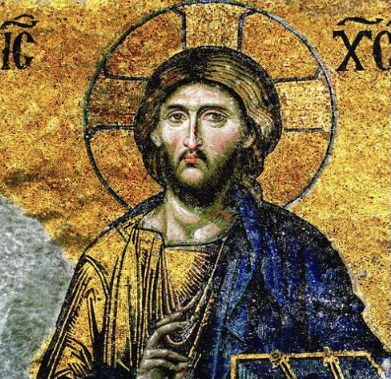
Orthodox Christianity, is one of the oldest and most traditional branches of Christianity, holds a significant place in the world for a variety of reasons. Its rich history, deep theological tradition, and strong cultural influence have made it a cornerstone of global Christianity and a significant force for both spiritual and social change.
One of the key reasons why Orthodox Christianity is important to the world is its preservation of ancient Christian traditions and teachings. As the original branch of Christianity, Orthodox Christianity traces its roots back to the earliest days of the church and has maintained a continuity with these ancient traditions throughout the centuries. Its liturgical practices, theological beliefs, and spiritual disciplines are deeply rooted in the early church fathers and have been passed down from generation to generation, providing a living link to the earliest Christian communities.
Orthodox Christianity is not simply a “religion of the book,” but the living experience of the Holy Spirit within the Church. Holy Tradition includes the Scriptures, the decisions of the Ecumenical Councils, the writings of the Fathers, the Holy Liturgy, and the holy icons. It is the continuous, uninterrupted life of the Church from Pentecost to the present day.
We are part of the One Holy Catholic Apostolic Church conforms to that of the undivided Catholic Church of the first millennium of its existence. It is expressed in the Symbol of Faith of the Nicene Creed, promulgated by the Council of Nicaea in AD 325 and enlarged by the Council of Constantinople in AD 381:
"I believe in one God, the Father Almighty, maker of Heaven and earth, and of all things visible and invisible, and in one Lord, Jesus Christ, the only begotten Son of God, begotten of the Father before all ages, God of God, Light of Light, true God of true God; begotten, not made; of one essence with the Father, by Whom all things were made, who, for us men, and for our salvation, came down from Heaven, and was incarnate by the Holy Spirit and the Virgin Mary; and became man; He was crucified for us under Pontius Pilate, suffered, and was buried, and the third day He rose again, according to the Scriptures; and ascended into Heaven, and is seated at the right hand of the Father; and He shall come again with glory, to judge the living and the dead; whose Kingdom shall have no end, and in the Holy Spirit, the Lord and giver of life, Who proceed from the Father; Who with the Father and the Son together is worshipped and glorified; Who spoke by the prophets, and in One, Holy, Catholic and Apostolic Church. I acknowledge one Baptism for the remission of sins; I look for the resurrection of the dead, and the life of the world to come. Amen".
Our faith and teachings are based on Saint Gregory the Theologian teaching that upholds his teaching: “I never have and never can honour anything above the Nicene Faith, that of the Holy Fathers who met there to destroy the Arian heresy”
We believe that the source of our Faith is fully expressed in the Nicene Creed (based on Sacred Scripture and Sacred Tradition). We also believe that Sacred Scripture (the Bible), which comprises the Old Testament and the New Testament, contains God’s revelation to us, particularly that concerning His Son, Our Lord Jesus Christ, and that in matters essential to our salvation.
The foundation of the Orthodox Church faith is based on the below statements:
THE SEVEN ECUMENICAL COUNCILS
The doctrinal foundation of the Orthodox Church is based on the definitions of the Seven Holy Ecumenical Councils. These divinely inspired assemblies protected the flock from heresy, articulating the truth of the Holy Trinity and the Incarnation of the Word, Jesus Christ, who is perfect God and perfect man.
THE HOLY MYSTERIES
The grace of God is communicated to the faithful through the Holy Mysteries. Baptism incorporates us into the Body of Christ; Confirmation seals us with the Holy Spirit; the Eucharist unites us with the Body and Blood of Christ. Confession, the Priesthood, Marriage and Unction sanctify every aspect of human life.
TRADITION
The ongoing life of God’s People is called Holy Tradition. The Holy Tradition of the Old Testament is expressed in the Old Testamental part of the Bible and in the ongoing life of the People of Israel until the birth of Christ. This tradition is fulfilled, completed and transcended in the time of the Messiah and in the Christian Church.
THE BIBLE
The written record of God’s revelation is the Bible, which means the book, or the books. The Bible is also called the Holy Scriptures. Scripture as a word simply means writings.
The Bible was written over thousands of years by many different people. It is divided into two testaments or covenants. These words signify agreements, pacts, or we might say, ‘deals.’ The two basic covenants are the old and the new; each has its own scriptures. As a book, the Bible contains many different kinds of writings: law, prophecy, history, poetry, stories, aphorisms, prayers, letters and symbolical visions.
The Old Testament
The Old Testament scripture begins with the five books of the Law called the Pentateuch, which means the five books; also called the Torah, which means the Law. Sometimes these books are also called the Books of Moses since they are centered on the exodus and the Mosaic laws.
In the Old Testament there are also books of the history of Israel; books called the Wisdom books such as the Psalms, Proverbs, and the Book of Job; and books of the prophecies which carry the names of the Old Testament prophets. A prophet is one who speaks the Word of God by direct divine inspiration. Only secondarily does the word prophet mean one who foretells the future.
The Orthodox Church also numbers among the genuine books of the Old Testament the so-called apocryphal books, meaning literally the secret or hidden writings. Other Christians put these books in a secondary place or reject completely their being of divine inspiration.
The New Testament
The centre of the New Testament part of the Bible is the four gospels of Matthew, Mark, Luke, and John, who are called the four evangelists, which means those who wrote the gospels. Gospel in Greek is evangelion which means the “glad tidings” or the “good news.”
In the New Testament scripture there is also the book of the Acts of the Apostles, written by Saint Luke. There are fourteen letters called the epistles (which simply means letters) of the Apostle Paul, though perhaps some, such as the Letter to the Hebrews, were not written directly by him. Three letters are also ascribed to the apostle John; two to the apostle Peter; and one each to the apostles James and Jude. Finally there is the Book of Revelation, also called the Apocalypse, which is ascribed to Saint John as well.
For the Orthodox, the Bible is the main written source of divine doctrine since God Himself inspired its writing by His Holy Spirit (see 2 Tim 3.16 and 2 Pet 1.20). This is the doctrine of the inspiration of the Bible, namely that men inspired by God wrote the words which are truly their own human words—all words are human! —but which nevertheless may be called all together the Word of God. Thus, the Bible is the Word of God in written form because it contains not merely the thoughts and experiences of men, but the very self-revelation of God.
The centre of the Bible as the written Word of God in human form is the person of the Living Word of God in human form, Jesus Christ. All parts of the Bible are interpreted in the Orthodox Church in the light of Christ since everything in the Bible leads up to Christ and speaks about Him (Lk 24.44). This fact is symbolized in the Orthodox Church by the fact that only the book of the four gospels is enthroned on the altars of our churches and not the entire Bible. This is so because everything in the Bible is fulfilled in Christ.
THE LITURGY
When the Church, which means literally the gathering or assembly of people who are called together to perform a specific task, assembles as God’s People to worship, this gathering is called the liturgy of the Church. As a word, liturgy means the common work or action of a particular group of people for the sake of all. Thus the divine liturgy of the Christian Church means the common work of God done by the people of God.
The liturgy of the Old Testament people was the official worship in the temple of Jerusalem according to the Mosaic Law, as well as the annual feasts and fasts and the private prayers and services held by the Israelites at home or in the synagogues. Synagogues by definition are houses of gathering; they are not temples since, according to the Law, there was just the one temple in Jerusalem where the priestly worship was conducted. In the synagogues the Israelites gathered for prayer and scriptural study, preaching, and contemplation of the Word of God.
In the New Testament Church, the liturgy is centered in the person of Christ and is primarily a “christening” of the Old Testament liturgical life. The Christian Church retains the liturgical life of the Old Testament in a new and eternal perspective. Thus, the prayers of the Old Testament, the scriptures and the psalms, are read and sung in the light of Christ. The sacrifice of the Body and Blood of Christ replaces the Old Testament sacrifices in the temple. And the Lord’s Day, Sunday, replaces the old Jewish sabbath which is Saturday.
The Jewish feasts also take on new meaning in the Christian Church, with the central feast of Passover, for example, becoming the celebration of Christ’s death and resurrection; and the feast of Pentecost becoming the celebration of the coming of the Holy Spirit, which fulfils the Old Testamental Law. The Christian liturgical year is also patterned after the Old Testamental prototype.
From the foundation of the Old Testament liturgy, the Church developed its own sacramental life with baptism in the name of the Holy Trinity, chrismation, holy communion, marriage, repentance, healing, and the Churchly ministry and priesthood taking on specifically Christian forms and meaning. In addition, a great wealth of specifically Christian prayers, hymns, and blessings were developed, together with specifically Christian feasts and celebrations in remembrance of New Testamental events and Saints.
The living experience of the Christian sacramental and liturgical life is a primary source of Christian doctrine. In the liturgy of the Church, the Bible and the Holy Tradition come alive and are given to the living experience of the Christian people. Thus, through prayer and sacramental worship, men are “taught by God” as it was predicted for the messianic age (Jn 6.45).
In addition to the living experience of the liturgy, the texts of the services and sacraments provide a written source of doctrine in that they may be studied and contemplated by one who desires an understanding of Christian teachings. According to the common opinion of the Orthodox Church, the sacramental and liturgical texts—the hymns, blessings, prayers, symbols, and rituals—contain no formal errors or deformations of the Christian faith and can be trusted absolutely to reveal the genuine doctrine of the Orthodox Church. It may well be that some of the historical information contained in church feasts is inaccurate or merely symbolical, but there is no question in the Church that the doctrinal and spiritual meaning of all of the feasts is genuine and authentic and provides true experience and knowledge of God.
THE COUNCILS
As the Church progressed through history it was faced with many difficult decisions. The Church always settled difficulties and made decisions by reaching a consensus of opinion among all the believers inspired by God who were led by their appointed leaders, first the apostles and then the bishops.
The first church council in history was held in the apostolic church to decide the conditions under which the gentiles, that is, the non-Jews, could enter the Christian Church (see Acts 15). From that time on, all through history councils were held on every level of church life to make important decisions. Bishops met regularly with their priests, also called presbyters or elders, and people. It became the practice, and even the law, very early in church history that bishops in given regions should meet in councils held on a regular basis.
THE LITURGY
When the Church, which means literally the gathering or assembly of people who are called together to perform a specific task, assembles as God’s People to worship, this gathering is called the liturgy of the Church. As a word, liturgy means the common work or action of a particular group of people for the sake of all. Thus the divine liturgy of the Christian Church means the common work of God done by the people of God.
The liturgy of the Old Testament people was the official worship in the temple of Jerusalem according to the Mosaic Law, as well as the annual feasts and fasts and the private prayers and services held by the Israelites at home or in the synagogues. Synagogues by definition are houses of gathering; they are not temples since, according to the Law, there was just the one temple in Jerusalem where the priestly worship was conducted. In the synagogues the Israelites gathered for prayer and scriptural study, preaching, and contemplation of the Word of God.
In the New Testament Church the liturgy is centered in the person of Christ and is primarily a “christening” of the Old Testament liturgical life. The Christian Church retains the liturgical life of the Old Testament in a new and eternal perspective. Thus, the prayers of the Old Testament, the scriptures and the psalms, are read and sung in the light of Christ. The sacrifice of the Body and Blood of Christ replaces the Old Testament sacrifices in the temple. And the Lord’s Day, Sunday, replaces the old Jewish sabbath which is Saturday.
The Jewish feasts also take on new meaning in the Christian Church, with the central feast of Passover, for example, becoming the celebration of Christ’s death and resurrection; and the feast of Pentecost becoming the celebration of the coming of the Holy Spirit, which fulfils the Old Testamental Law. The Christian liturgical year is also patterned after the Old Testamental prototype.
From the basic foundation of the Old Testament liturgy, the Church developed its own sacramental life with baptism in the name of the Holy Trinity, chrismation, holy communion, marriage, repentance, healing, and the Churchly ministry and priesthood taking on specifically Christian forms and meaning. In addition, a great wealth of specifically Christian prayers, hymns, and blessings were developed, together with specifically Christian feasts and celebrations in remembrance of New Testamental events and Saints.
The living experience of the Christian sacramental and liturgical life is a primary source of Christian doctrine. In the liturgy of the Church, the Bible and the Holy Tradition come alive and are given to the living experience of the Christian people. Thus, through prayer and sacramental worship, men are “taught by God” as it was predicted for the messianic age (Jn 6.45).
In addition to the living experience of the liturgy, the texts of the services and sacraments provide a written source of doctrine in that they may be studied and contemplated by one who desires an understanding of Christian teachings. According to the common opinion of the Orthodox Church, the sacramental and liturgical texts—the hymns, blessings, prayers, symbols, and rituals—contain no formal errors or deformations of the Christian faith and can be trusted absolutely to reveal the genuine doctrine of the Orthodox Church. It may well be that some of the historical information contained in church feasts is inaccurate or merely symbolical, but there is no question in the Church that the doctrinal and spiritual meaning of all of the feasts is genuine and authentic and provides true experience and knowledge of God.
THE SEVEN SACRAMENTS OF THE CHURCH
The Orthodox Church recognise and affirm the Seven Sacraments of the Church:
Baptism.
Chrismation (Confirmation).
Communion (Holy Eucharist).
Holy Ordination.
Penance.
Anointing of the sick (Holy Unction of the sick and Extreme Unction for the dying).
Holy Matrimony / Marriage.
THE COUNCILS
As the Church progressed through history it was faced with many difficult decisions. The Church always settled difficulties and made decisions by reaching a consensus of opinion among all the believers inspired by God who were led by their appointed leaders, first the apostles and then the bishops.
The first Church council in history was held in the apostolic church to decide the conditions under which the gentiles, that is, the non-Jews, could enter the Christian Church (see Acts 15). From that time on, all through history councils were held on every level of church life to make important decisions. Bishops met regularly with their priests, also called presbyters or elders, and people. It became the practice, and even the law, very early in church history that bishops in given regions should meet in councils held on a regular basis.
The dogmatic definitions (dogma means official teaching) and the canon laws of the ecumenical councils are understood to be inspired by God and to be expressive of His will for men. Thus, they are essential sources of Orthodox Christian doctrine.
The Seven Ecumenical Councils
Nicea 1 - 325
Formulated the First Part of the Creed, defining the divinity of the Son of Go
Constantinople I - 381
Formulated the Second Part of the Creed, defining the divinity of the Holy Spirit
Ephesus - 431
Defined Christ as the Incarnate Word of God and Mary as Theotokos
Chalcedon -451
Defined Christ as Perfect God and Perfect Man in One Person
Reconfirmed the Doctrines of the Trinity and of Christ
Constantinople III - 680
Affirmed the True Humanity of Jesus by insisting upon the reality of His human will and action
Nicea II - 787
Affirmed the propriety of icons as genuine expressions of the Christian Faith
Besides the seven ecumenical councils, there are other local church councils whose decisions have also received the approval of all Orthodox Churches in the world, and so are considered to be genuine expressions of the Orthodox faith and life. The decisions of these councils are mostly of a moral or structural character. Nevertheless, they too reveal the teaching of the Orthodox Church.
THE FATHERS
There are in the Church several Saints who were theologians and spiritual teachers who defended and explained the doctrines of the Christian Faith. These saints are called the holy fathers of the Church and their teachings are called the patristic teachings (patristic is from the Greek word for father).
Some of the Holy Fathers are called apologists because they defended the Christian teachings against those outside the Church who ridiculed the faith. Their writings are called apologies which means “answers” or “defenses.”
Others of the Holy Fathers defended the Christian faith against certain members of the Church who deformed the truth and life of Christianity by choosing certain parts of the Christian revelation and doctrine while denying other aspects. Those who deformed the Christian faith in this way and thereby destroyed the integrity of the Christian Church are called the heretics, and their doctrines are called heresies. By definition heresy means “choice,” and a heretic is one who chooses what he wants according to his own ideas and opinions, selecting certain parts of the Christian Tradition while rejecting others. By his actions, a heretic not only destroys the fullness of the Christian truth but also divides the life of the Church and causes division in the community.
Generally speaking, the Orthodox tradition regards the teachers of heresies as not merely being mistaken or ignorant or misguided; it accuses them of being actively aware of their actions and therefore sinful. A person merely misguided or mistaken or teaching what he believes to be the truth without being challenged or opposed as to his possible errors is not considered to be a heretic in the true sense of the word. Many of the saints and even the holy fathers have elements in their teachings which Christians of later times have considered as being false or inaccurate. This, of course, does not make them heretics.
Not all of the holy fathers were defenders against falsehood or heresy. Some of them were simply the very positive teachers of the Christian faith, developing and explaining its meaning in a deeper and fuller way. Others were teachers of the spiritual life, giving instruction to the faithful about the meaning and method of communion with God through prayer and Christian living. Those teachers who concentrated on the struggle of spiritual life are called the ascetical fathers, asceticism being the exercise and training of the “spiritual athletes”; and those who concentrated on the way of spiritual communion with God are called the mystical fathers, mysticism being defined as the genuine, experiential union with the Divine.
All of the Holy Fathers, whether they are classified as theological, pastoral, ascetical or mystical gave their teachings from the sources of their own living Christian experience. They defended and described and explained the theological doctrines and ways of spiritual life from their own living knowledge of these realities. They blended together the brilliance of the intellect with the purity of the soul and the righteousness of life. This is what makes them the holy fathers of the Church.
The writings of the Church Fathers are not infallible, and it has even been said that in any given one of them some things could be found which could be questioned in the light of the fullness of the Tradition of the Church. Nevertheless, taken as a whole, the writings of the Fathers which are built upon the biblical and liturgical foundations of Christian faith and life have great authority within the Orthodox Church and are primary sources for the discovery of the Church’s doctrine.
The writings of some of those fathers who have received the universal approval and praise of the Church through the ages are of particular importance, such as those of Ignatius of Antioch, Irenaeus of Lyons, Athanasius of Alexandria, Basil the Great, Gregory of Nyssa, Gregory the Theologian, John Chrysostom, Cyril of Alexandria, Cyril of Jerusalem, Maximus the Confessor, John of Damascus, Photius of Constantinople, and Gregory Palamas; and those of the ascetical and spiritual fathers such as Anthony of Egypt, Macarius of Egypt, John of the Ladder, Isaac of Syria, Ephraim of Syria, Simeon the New Theologian, and others.
Sometimes it is difficult for us to read the writings of the fathers of the Church since their problems were often complicated and their manner of writing very different in style from our own. Also, most of the spiritual and ascetical writings are put in the monastic setting and must be transposed in order to be understandable and usable to those of us who are not monks or nuns. Nevertheless, it is important to read the writings of the fathers directly. One should do so slowly, a little at a time, with careful thought and consideration and without making quick and capricious conclusions. . . the same way that one would read the Bible. Among the church fathers, Saint John Chrysostom’s writings are very clear and direct and can be read by many with great profit if the proper care is given. Also, the Philokalia—an anthology of spiritual writings—exists in English, at least in part, and with proper care, it can be helpful to a mature Christian in search of deeper insights into the spiritual life.
THE SAINTS
The doctrine of the Church comes alive in the lives of the true believers, the saints. The saints are those who literally share the holiness of God. “Be holy, for I your God am holy” (Lev 11.44; 1 Pet 1.16). The lives of the Saints bear witness to the authenticity and truth of the Christian gospel, the sure gift of God’s holiness to men.
In the Church there are different classifications of saints. In addition to the holy fathers who are quite specifically glorified for their teaching, there are several classifications of the various types of holy people according to the particular aspects of their holiness.
Thus, there are the apostles who are sent to proclaim the Christian faith, the evangelists who specifically announce and even write down the gospels, the prophets who are directly inspired to speak God’s word to men. There are the confessors who suffer for the faith and the martyrs who die for it. There are the so-called “holy ones,” the saints from among the monks and nuns; and the “righteous,” those from among the lay people.
In addition, the church service books have a special title for saints from among the ordained clergy and another special title for the holy rulers and statesmen. Also, there is the strange classification of the fools for Christ’s sake. These are they who through their total disregard for the things that people consider so necessary—clothes, food, money, houses, security, public reputation, etc.—have been able to witness without compromise to the Christian Gospel of the Kingdom of Heaven. They take their name from the sentence of the Apostle Paul: “We are fools for Christ’s sake” (1 Cor 4.10; 3.18).
CANONS
There are canon laws of Ecumenical Councils, of provincial and local councils, and of individual church fathers which have been received by the entire Orthodox Church as normative for Christian doctrine and practice. As a word canon means literally rule or norm or measure of judging. In this sense the canon laws are not positive laws in the juridical sense and cannot be easily identified with laws as understood and operative in human jurisprudence.
The canons of the Church are distinguished first between those of a dogmatic or doctrinal nature and those of a practical, ethical, or structural character. They are then further distinguished between those which may be changed and altered and those which are unchangeable and may not be altered under any conditions.
The dogmatic canons are those council definitions which speak about an article of the Christian faith; for example, the nature and person of Jesus Christ. Although such canons may be explained and developed in new and different words, particularly as the Church Tradition grows and moves through time, their essential meaning remains eternal and unchanging.
Some canons of a moral and ethical character also belong to those which cannot be changed. These are the moral canons whose meaning is absolute and eternal and whose violation can in no way be justified. The canons which forbid the sale of Church sacraments are of this kind.
There are, in addition, canons of a quite practical nature which may be changed and which, in fact, have been changed in the course of the life of the Church. There are also those which may be changed but which remain in force since the Church has shown the desire to retain them. An example of the former type is the canon which requires the priests of the church to be ordained to office only after reaching thirty years of age. It might be said that although this type of canon remains normative and does set a certain ideal which theoretically may still be of value, the needs of the Church have led to its violation in actual life. The canon which requires that the bishops of the Church be unmarried is of the latter type.
Always clear which canons express essential marks of Christian life and which do not. There are often periods of controversy over certain canons as to their applicability in given times and conditions. These factors, however, should not lead the members of the Church to dismay or to the temptation either to enforce all canons blindly with identical force and value or to dismiss all the canons as meaningless and insignificant.
In the first place, the canons are “of the Church” and therefore cannot possibly be understood as “positive laws” in a juridical sense; secondly, the canons are certainly not exhaustive, and do not cover every possible aspect of Church faith and life; thirdly, the canons were produced for the most part in response to some particular dogmatic or moral question or deviation in the Church life and so usually bear the marks of some particular controversy in history which has conditioned not merely their particular formulation, but indeed their very existence.
Taken by themselves, the canon laws of the Church can be misleading and frustrating, and therefore superficial people will say “either enforce them all or discard them completely.” But taken within the wholeness of Orthodox life—theological, historical, canonical, and spiritual—these canons do assume their proper place and purpose and show themselves to be a rich source for discovering the living Truth of God in the Church. In viewing the canons of the Church, the key factors are Christian knowledge and wisdom, which are borne from technical study and spiritual depth. There is no other “key” to their usage; and any other way would be according to the Orthodox faith both unorthodox and unchristian.
CHURCH ART
The Orthodox Church has a rich tradition of iconography as well as other church arts: music, architecture, sculpture, needlework, poetry, etc. This artistic tradition is based on the Orthodox Christian doctrine of human creativity rooted in God’s love for man and the world in creation.
Because man is created in the image and likeness of God, and because God so loved man and the world as to create, save, and glorify them by His own coming in Christ and the Holy Spirit, the artistic expressions of man and the blessings and inspirations of God merge into a holy artistic creativity which truly expresses the deepest truths of the Christian vision of God, man, and nature.
The icon is Orthodoxy’s highest artistic achievement. It is a gospel proclamation, a doctrinal teaching, and a spiritual inspiration in colours and lines.
The traditional Orthodox icon is not a holy picture. It is not a pictorial portrayal of some Christian saint or event in a “photocopy” way. It is, on the contrary, the expression of the eternal and divine reality, significance, and purpose of the given person or event depicted. In the gracious freedom of the divine inspiration, the icon depicts its subject as at the same time both human and yet “full of God,” earthly and yet heavenly, physical and yet spiritual, “bearing the cross” and yet full of grace, light, peace, and joy.
In this way the icon expresses a deeper “realism” than that which would be shown in the simple reproduction of the physical externals of the historic person or happening. Thus, in their own unique way the various types of Orthodox icons, through their form and style and manner of depiction as well as through their actual contents and use in the Church, are an inexhaustible source of revelation of the Orthodox doctrine and faith.
Musical expression may be added to the icon as a source of discovering the Orthodox Christian worldview. Here, however, there is greater difficulty because of the loss in recent years of the liturgical and spiritual meaning of music in the Church. Just as the theological meaning of the traditional Orthodox icon is being rediscovered, so is the traditional doctrinal significance of Orthodox music. The process in the latter case, however, is much slower, much more difficult, and much less evident to the average person.
The traditional Orthodox architecture also expresses the doctrine of the Church, particularly in its emphasis on “God with us” and the complete communion of men and the world with God in Christ. The use of domed ceilings, the shape and layout of the buildings, the placing of the icons, the use of vestments, etc., all express the teachings of the Church. The traditional Orthodox church architecture and artwork are expressions of the Orthodox Christian doctrines of creation, salvation, and eternal life.
It is a very important spiritual exercise for Christians to study the holy icons and the hymns of the Church’s liturgy. One can learn much about God and His gracious actions among men by a careful and prayerful contemplation of the artistic expressions of Church doctrine and life.
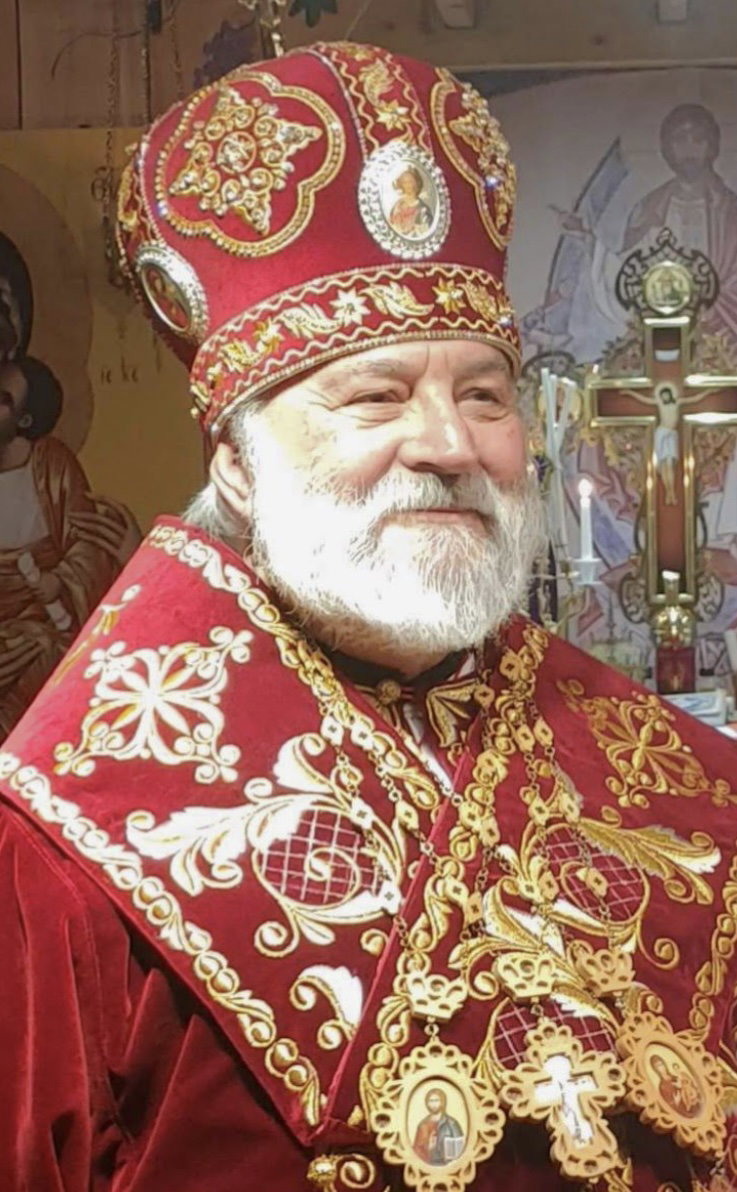
His Holiness Patriarch James III
Patriarch of Antioch & Jerusalem
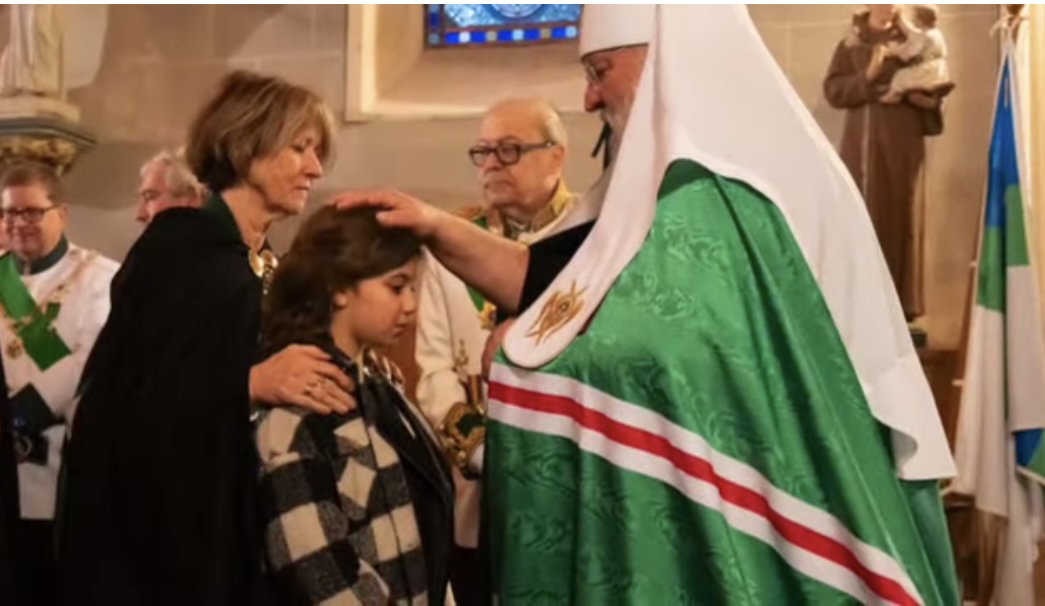
His Holiness was bornin Le Mans (Sarthe) on December 17th1945. In 1984 he joined the Orthodox Church of France. He entered the monastic life on July 8, 1984 as a Novice Monk. He was ordained as a Subdeacon on November 1st , 1986, a Deacon on January 3rd, 1988 and a Priest on December 17th, 1988. In 1994, he joined the Melkite Orthodox Church and was elevated to the rank of Archimandrite.
In 2011 he founded the Orthodox Church of Europe, on April 2nd, 2011 he was consecrated by Orthodox Patriarch Moses of Ukraine for the Orthodox Church of Europe, as Bishop of Lyon in Paris. On May 7th 2012, he was elevated to the rank of Archbishop of Paris and given the dignity of Metropolitan of Europe. On April 17th, 2015 in Paris, he took the monastic vows of Grand Habit.
On October 10th 2015, he was elected Primate and President of the Holy Synod of the Orthodox Church of Europe. On April 17th, 2015, he took the monastic vows of the Great Habit (Great Schema) on the feast day of the Mother of God Life-Giving Source. In 2021 then Metropolitan Jacques was elected Patriarch with 160,000 Orthodox faithful voted for Metropolitan Jacques to head the newly established Patriarchate.
The enthronement ceremonies of His Beatitude James III took place on April 30 and May 1st, 2021, near Orleans, at the monastery of the Most Holy Mother of God and Saint Nectarios of Aegina, seat of the Patriarchate.
Today the Patriarch of Antioch & Jerusalem have jurisdictions in over 95 countries in five continents, plus 400 Bishops and 1800 Priests and more than 30,000 faithful.
The Patriarchate by the Grace of God is flourishing every day where jurisdictions and churches are being established.
His Education, Degrees & Work
Doctor Honoris Causa in Theology, Saint Melaine School;
Doctor Honoris Causa, International Orthodox Academy of Advanced Theological StudiesDoctor. hc Prof. Academico - Frederico II
Corona Reale Uomo di Pace - Frederico II
Ambasciatore umanista nel Mondo - Frederico IIPresident of the International Orthodox Academy of Advanced Theological StudiesHonorary Member of the Padre Pio Academy,
Superior General of the Chaplaincy Corps,
President of the Council for Peace of Nations,
Co-President of the World Alliance of Canonical Orthodox Churches Honorary President of the International Court of Mediation and Arbitration Former Labour Court Judge in Paris
President of the Orthodox Relief NGO
In 2017, he established with Pastor Sostha Muvuma: The World of United Christians which brings together all Christians beyond the borders of religions, Catholics, Protestants and Orthodox without exclusivity in order to proclaim together the divine Brotherhood of the Father and the Son and the Holy Spirit. Children of the same Father, we want to achieve the goal of proudly carrying the Love of our God and acting for Peace in the world. The goal is to unite several tens of millions of Christians.
His Medals
Gold Medal and Grand Necklace of Heads of State (Senate 2022)
Silver Medal of the City of Paris
Medal of Honor of the Austrasian
Regiment Civic Star Silver
Gold Medal of the Civic Star
Commander of the Universal League of Public Good Silver
Medal Rifle Regiment Fürst Karl Anton von Bohenzollern No. 40
European Police Gold Medal
NATO Medal Medal of the City of Milan
Caesar of the Frederico II Academy
Knight of the Military Order of Saint George
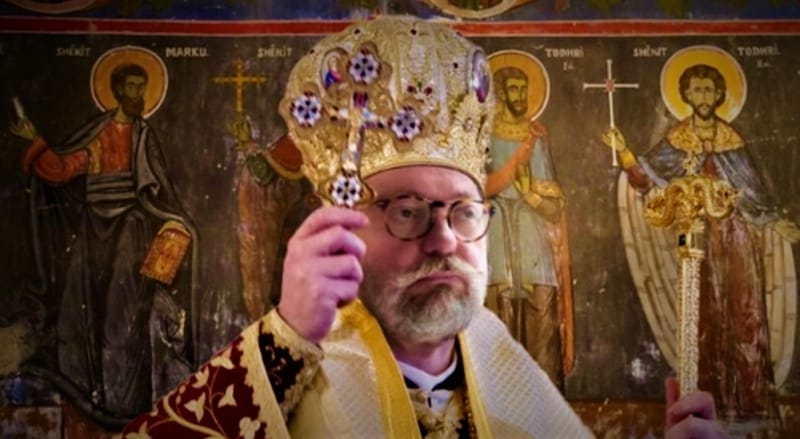
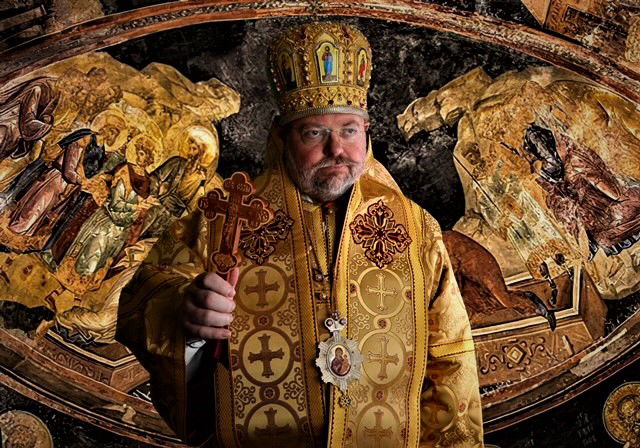
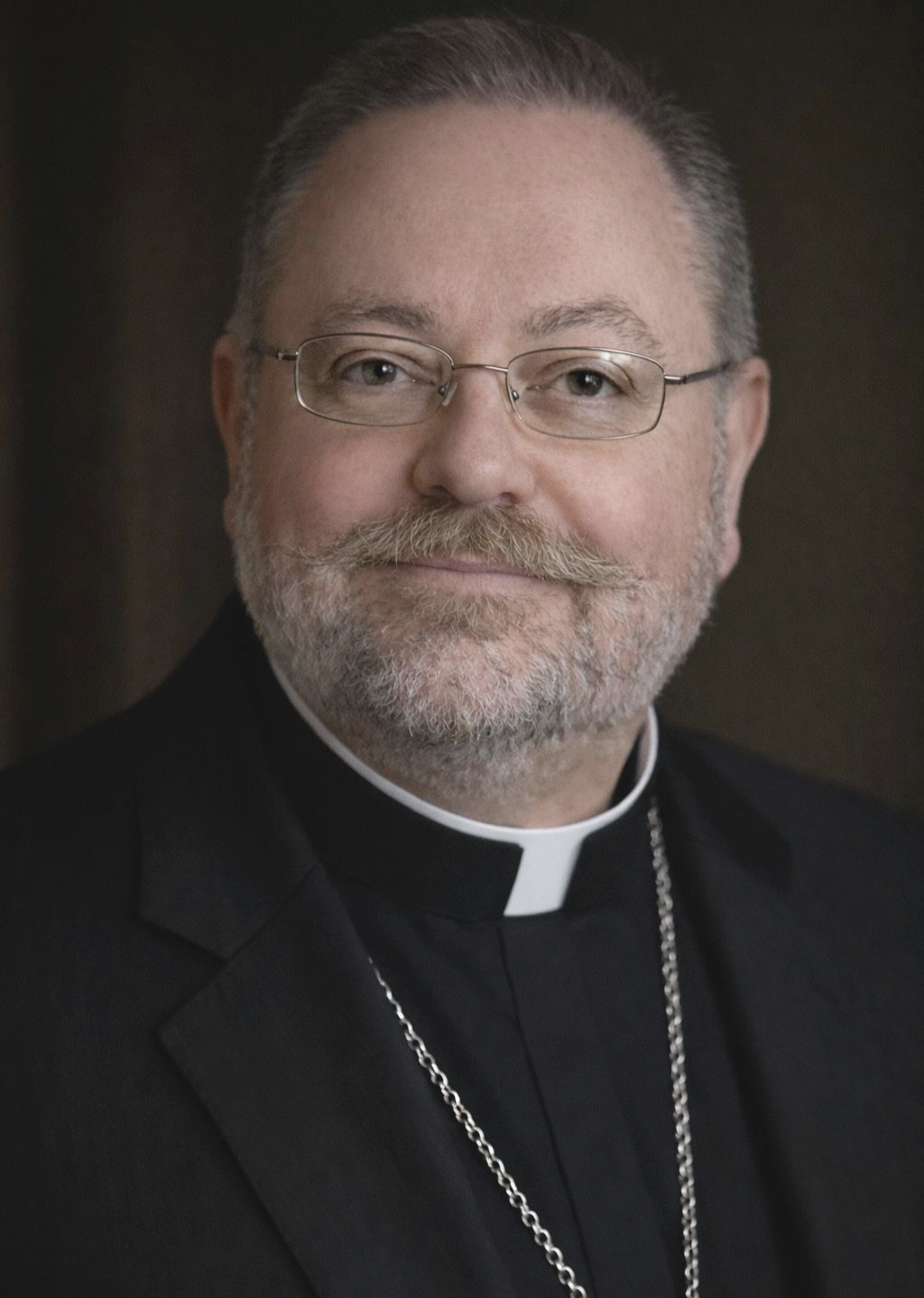
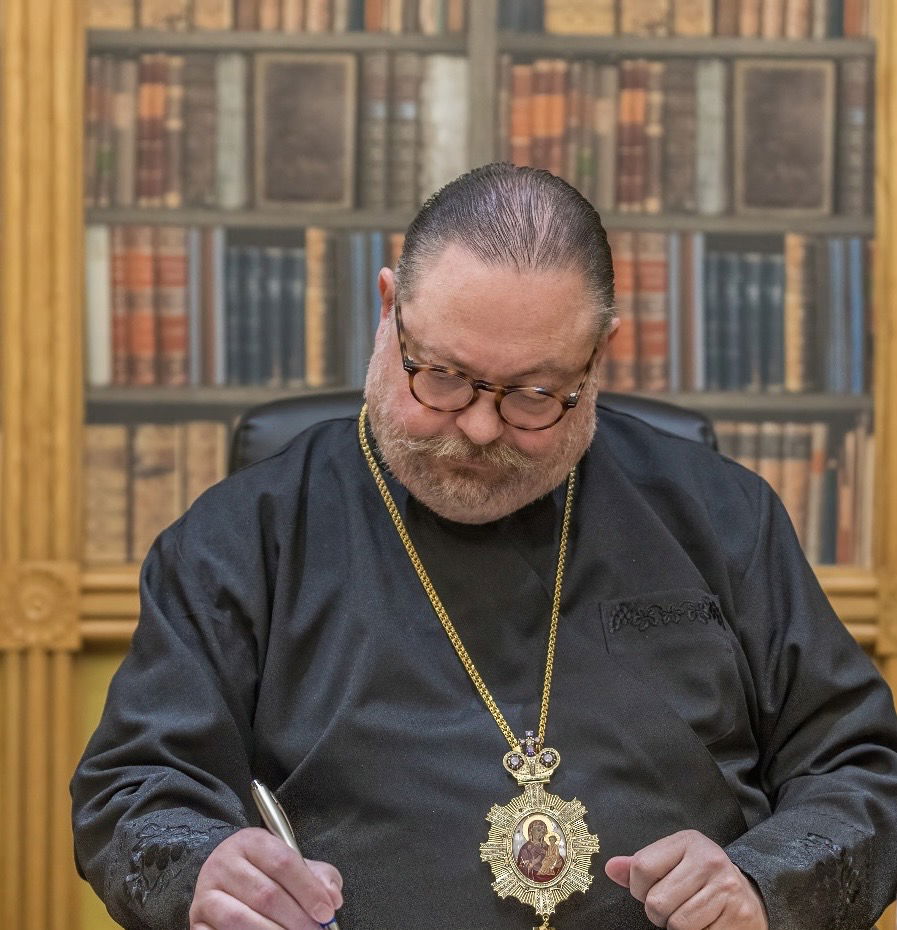
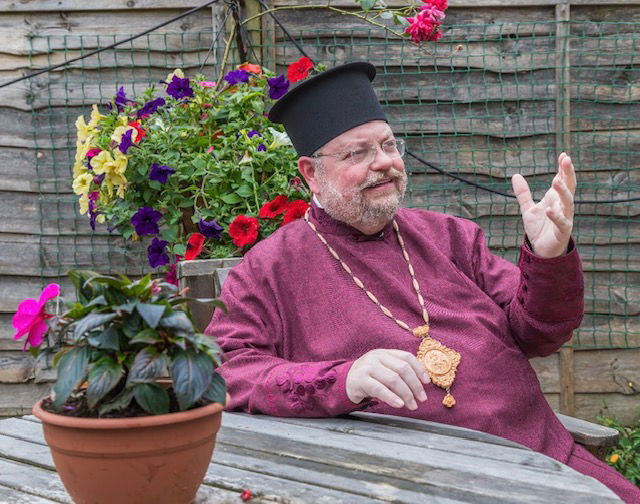
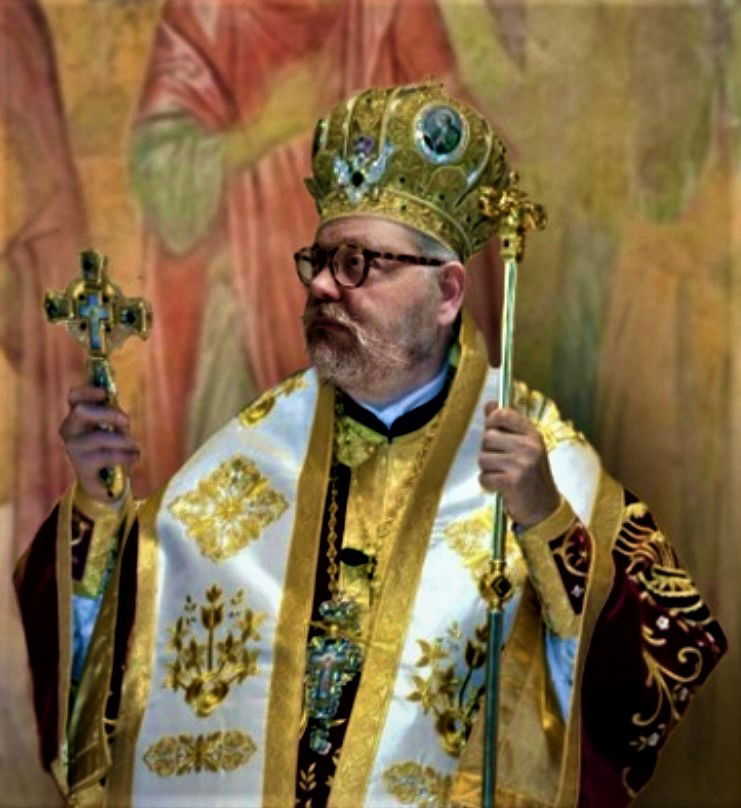
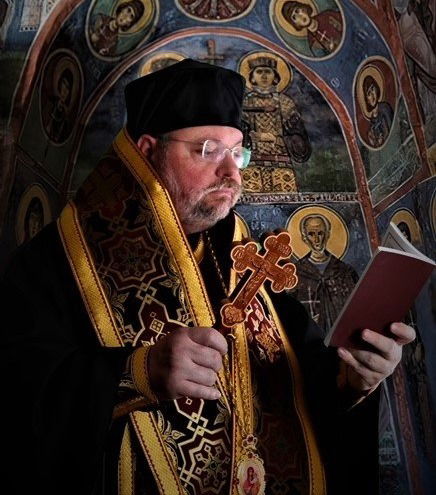
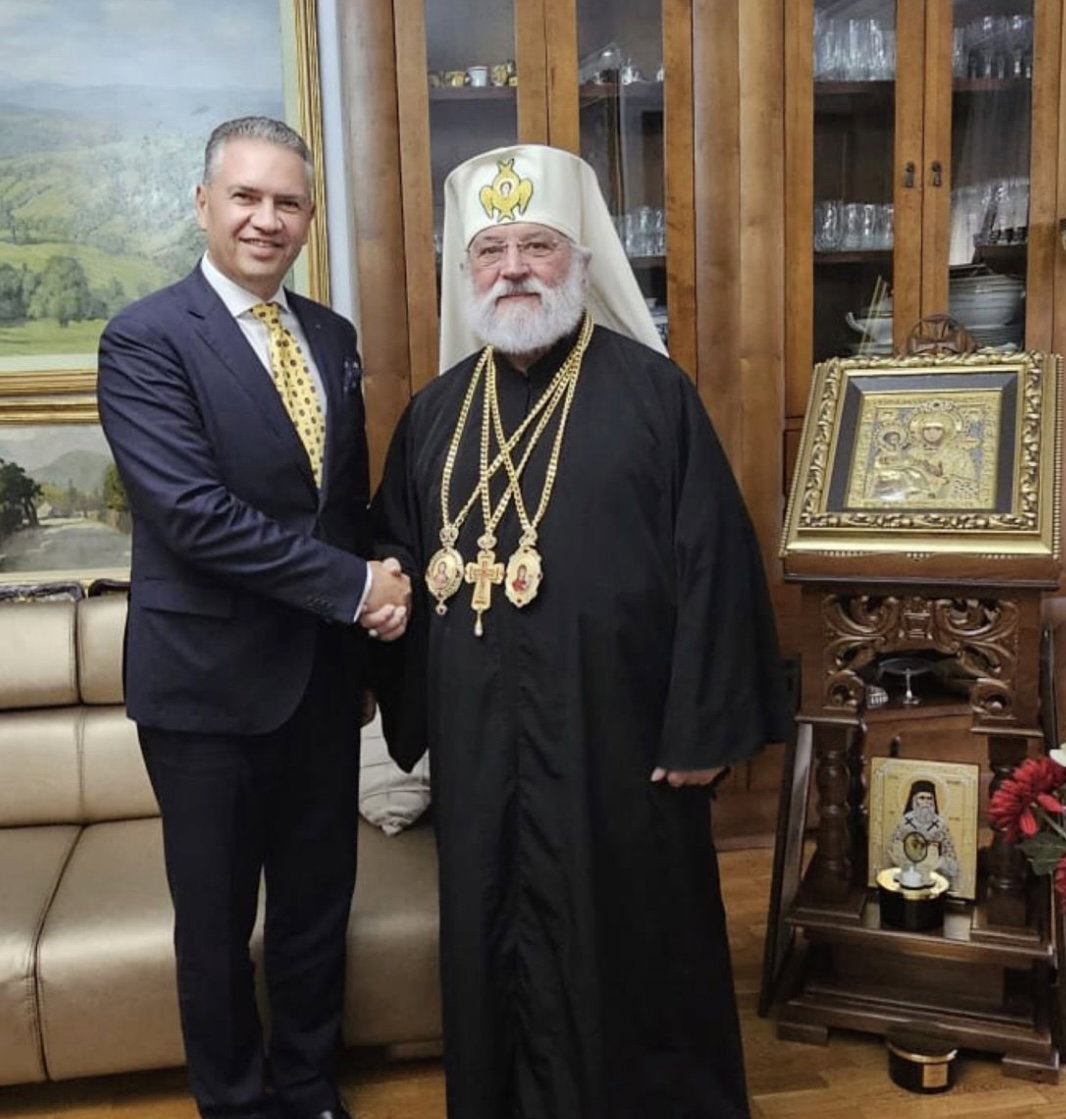
Metropolitan Archbishop of Great Britain
Primate of The Byzantine Orthodox Congregation
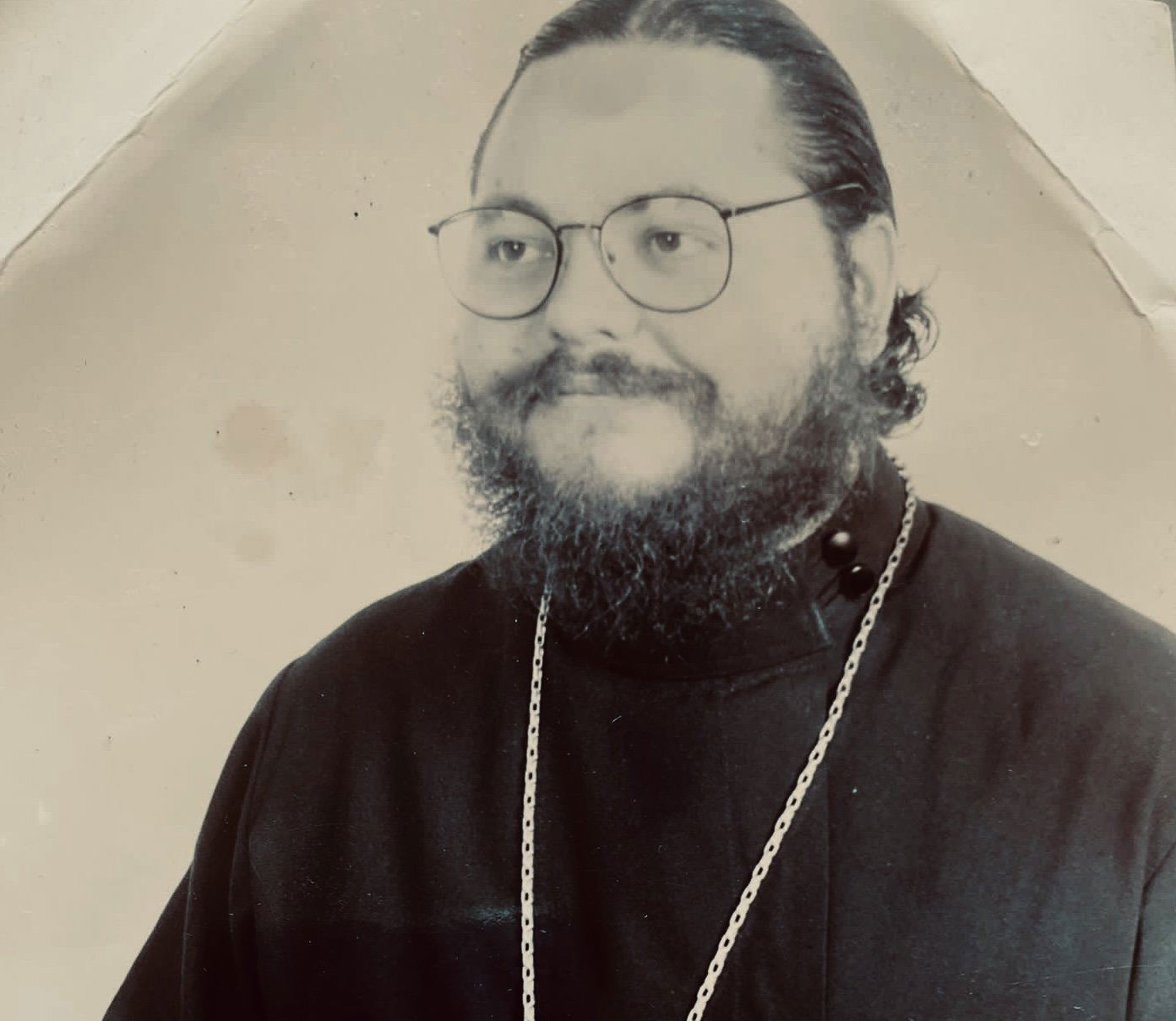
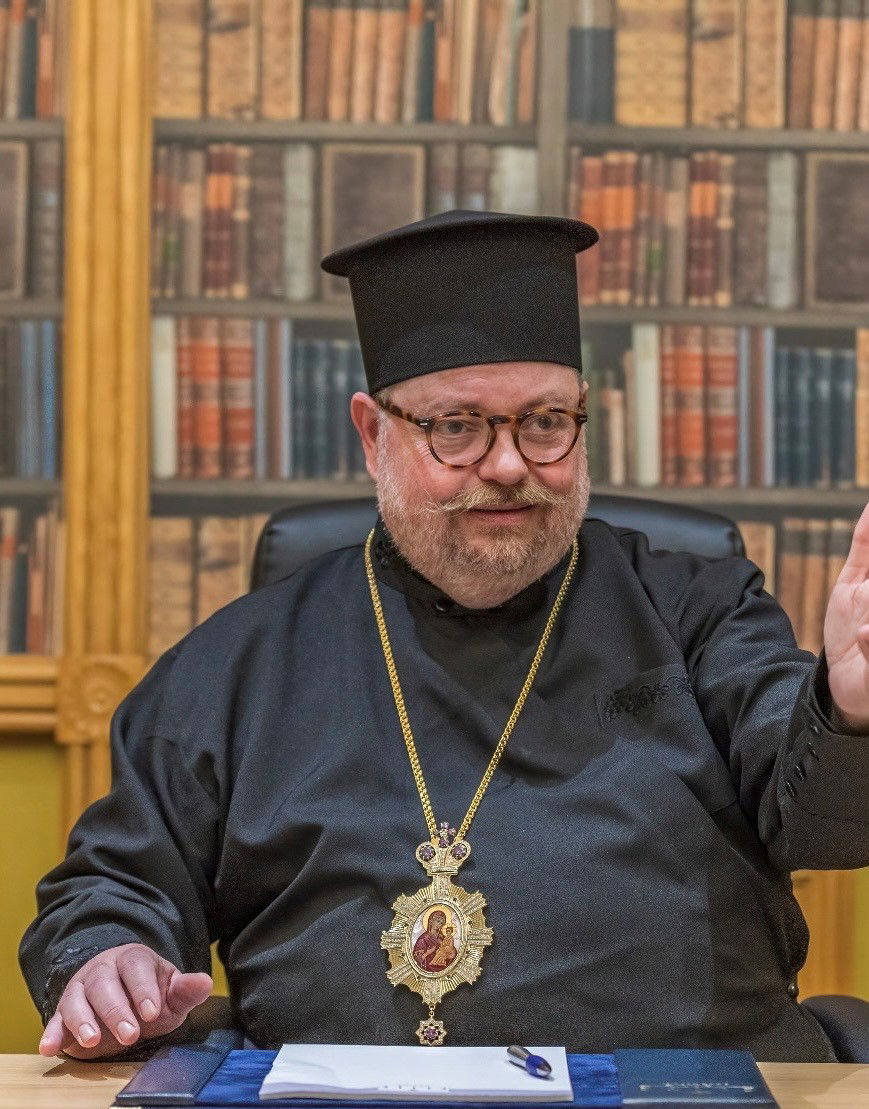
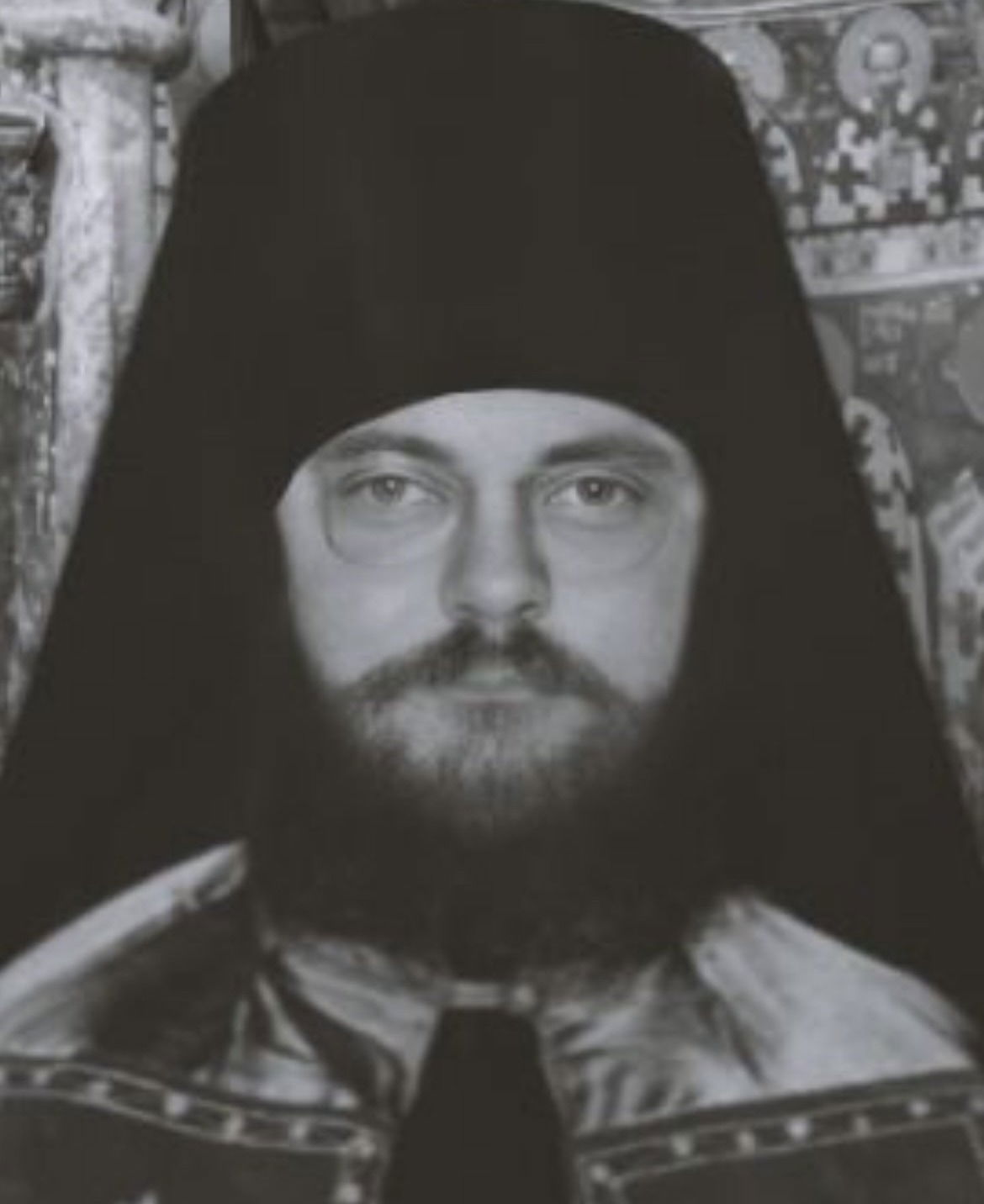
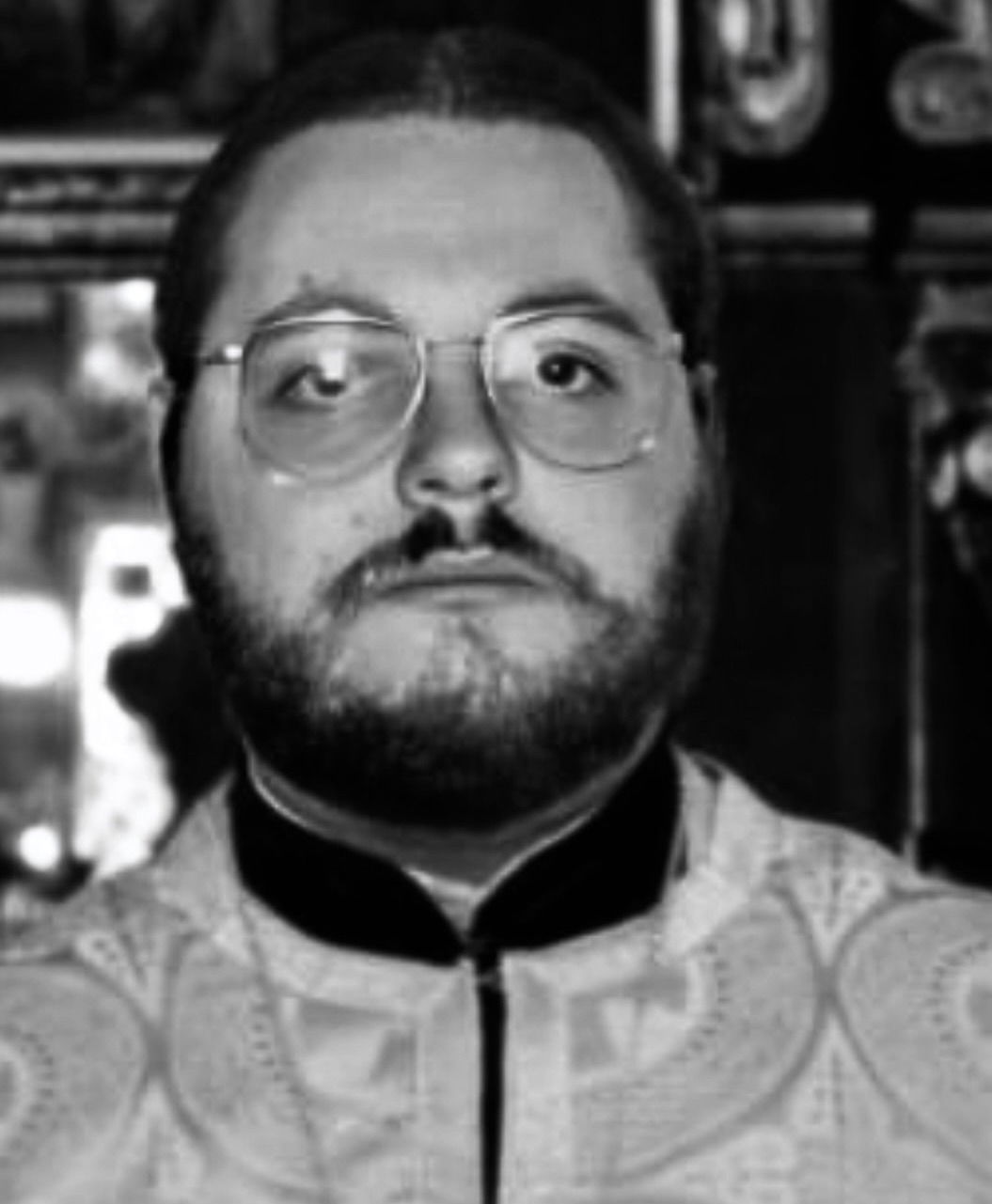
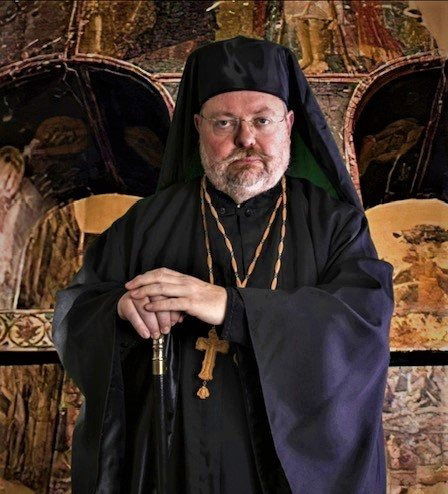
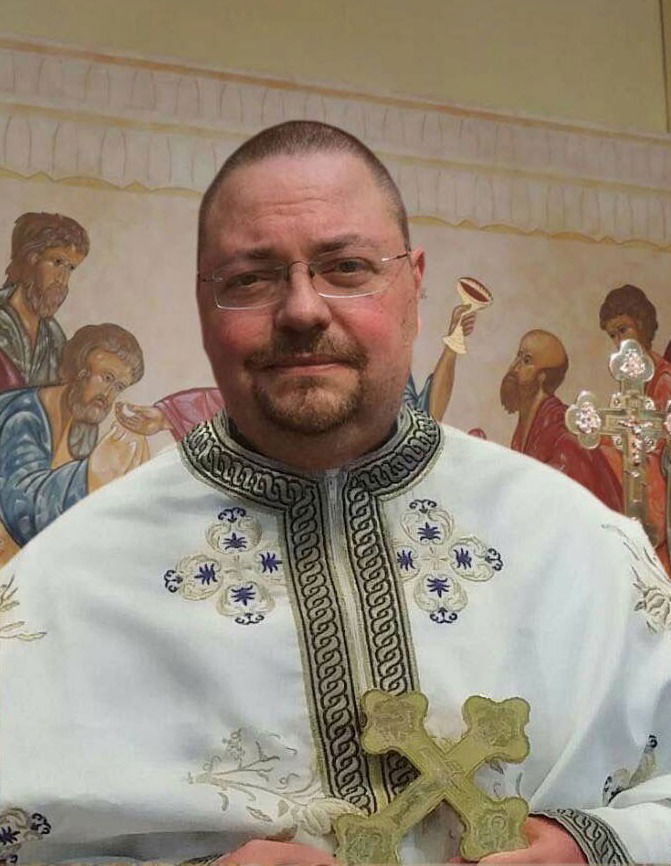
Metropolitan Archbishop was born in the Middle East in a Christian Orthodox family. From his youth, he was inclined to serve the Church. In the mid 80's, due to unstable political situation and civil wars in the region, he travelled to New York, USA to attend Saint Vladimir Orthodox Theological Seminary.
His Eminence holds a MA Degree in Divinity; he also holds a MA Degree in Business Administration from Cornell University; he holds also a PHD in Byzantine Theology as well.
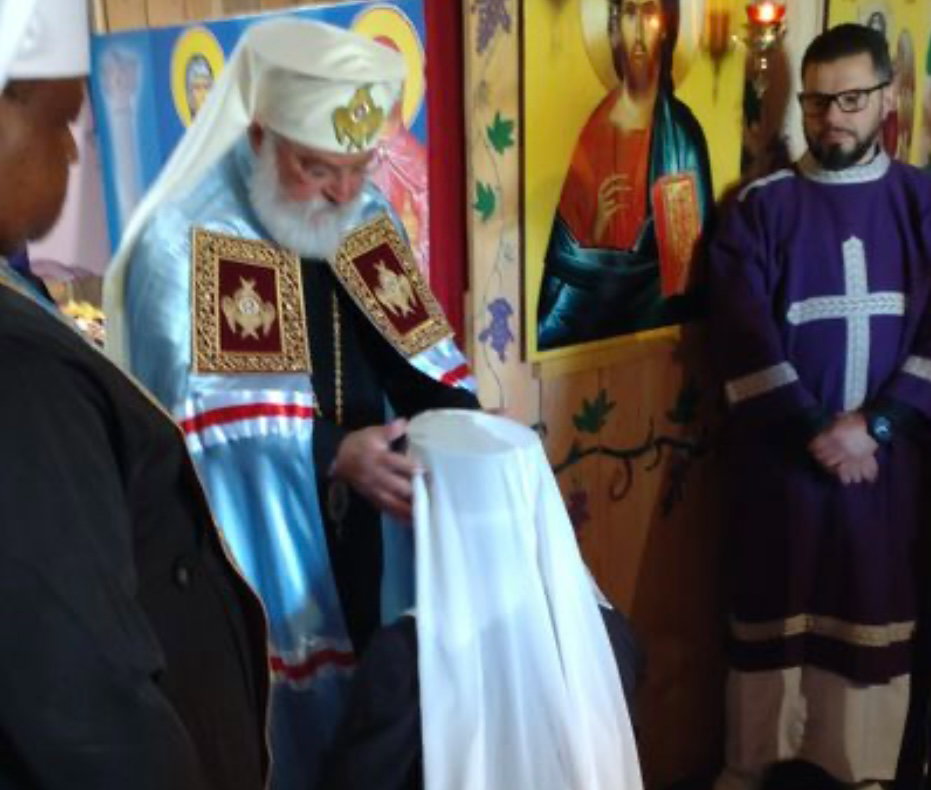
On the 22nd of April 1991, the Vigil service feast of Saint George the Great Martyr, he formally took the monastic vows in accordance with the Orthodox Eastern Rite. On the 23rd of April 1991, he was ordained to the Holy Deaconate. On the 23rd of April 1992, he was ordained to the Holy Priesthood where he served in many parishes in the USA.
In August 1994 he was elevated to the rank of Archimandrite. In June 1995 he was consecrated a Titular Bishop, he was asked to take on reinvigorating the missionary work in Eastern Africa.
His mission was to create a strong Christian community mission work and education system in that part of the world.
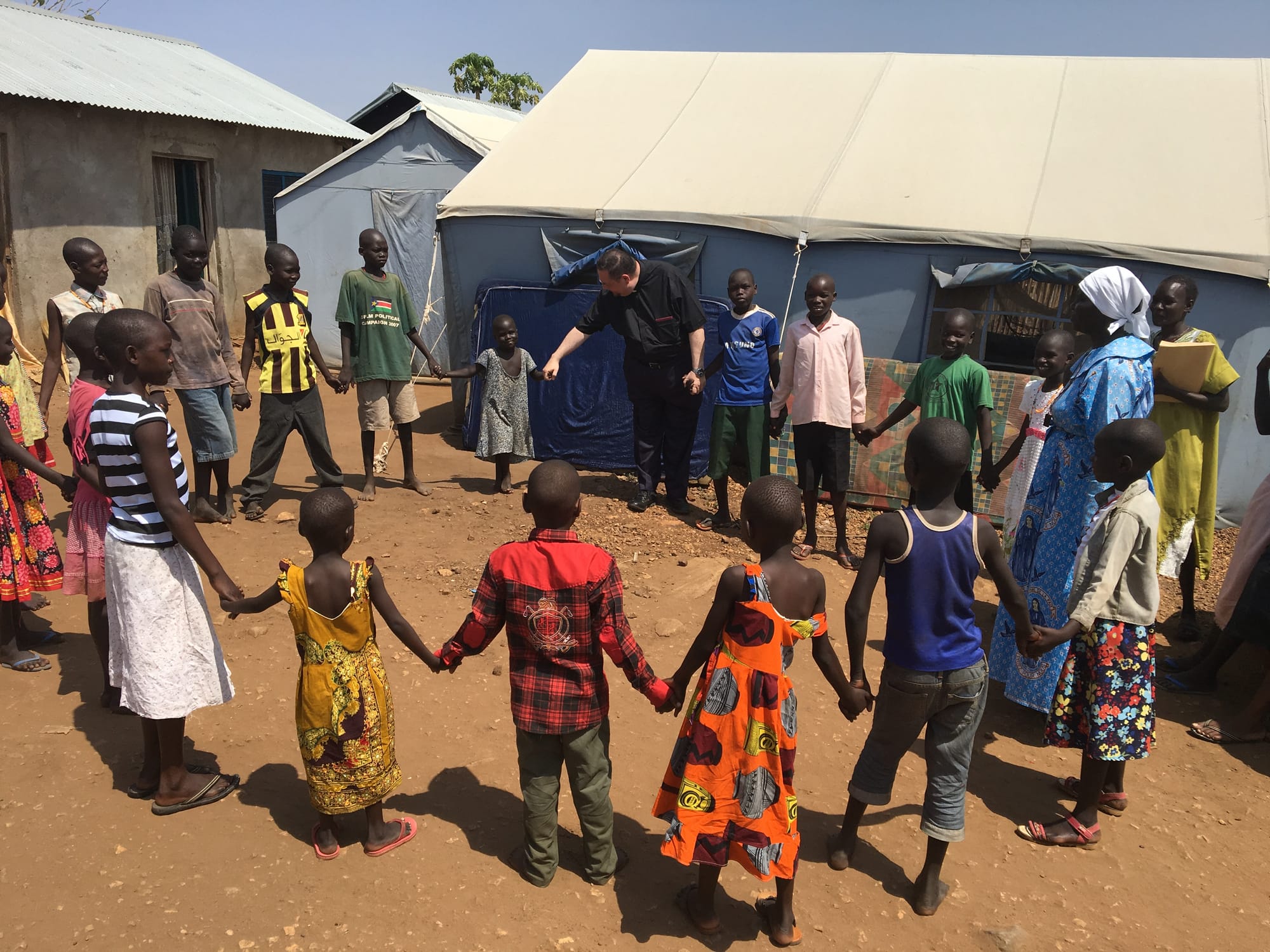
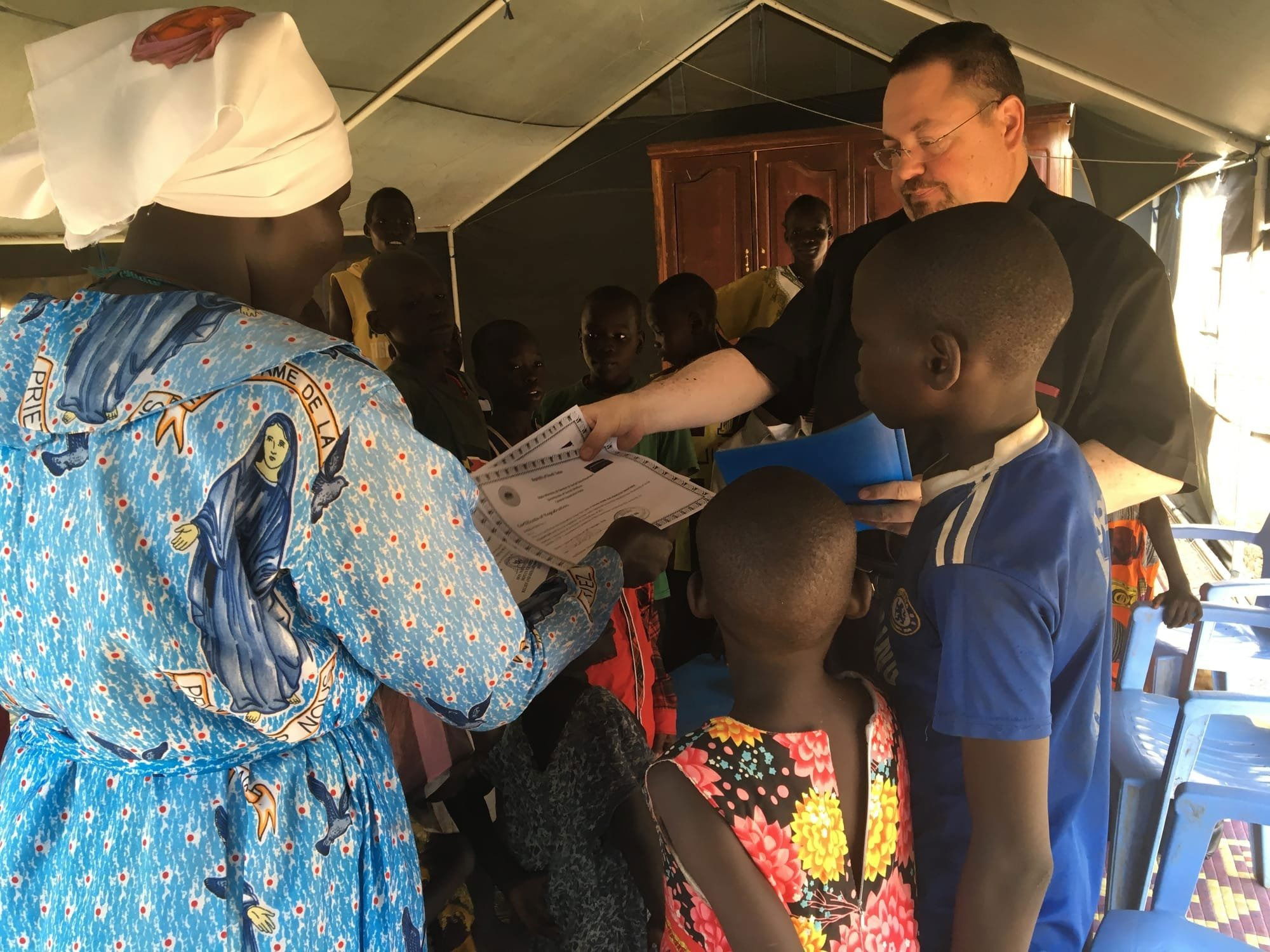
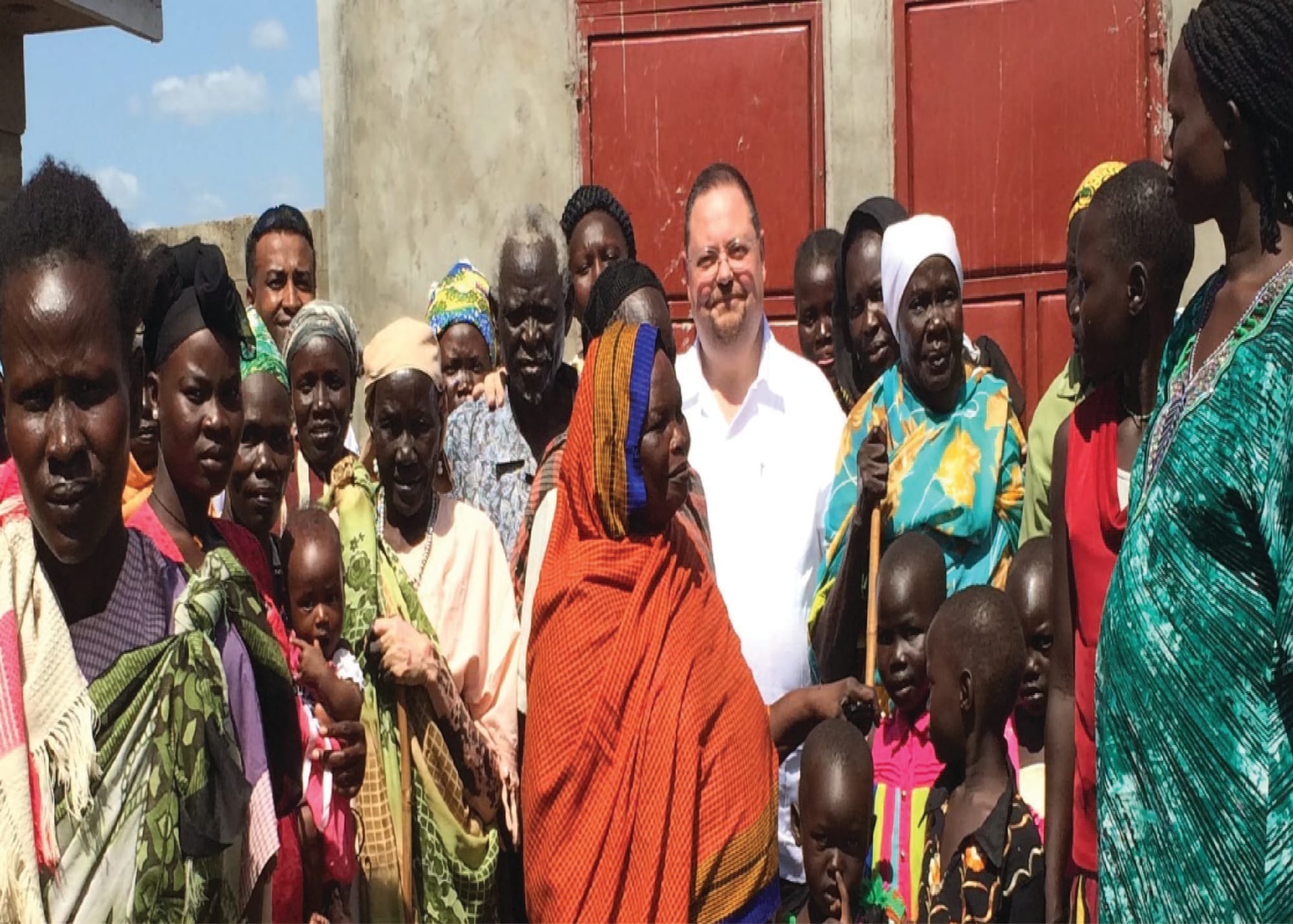
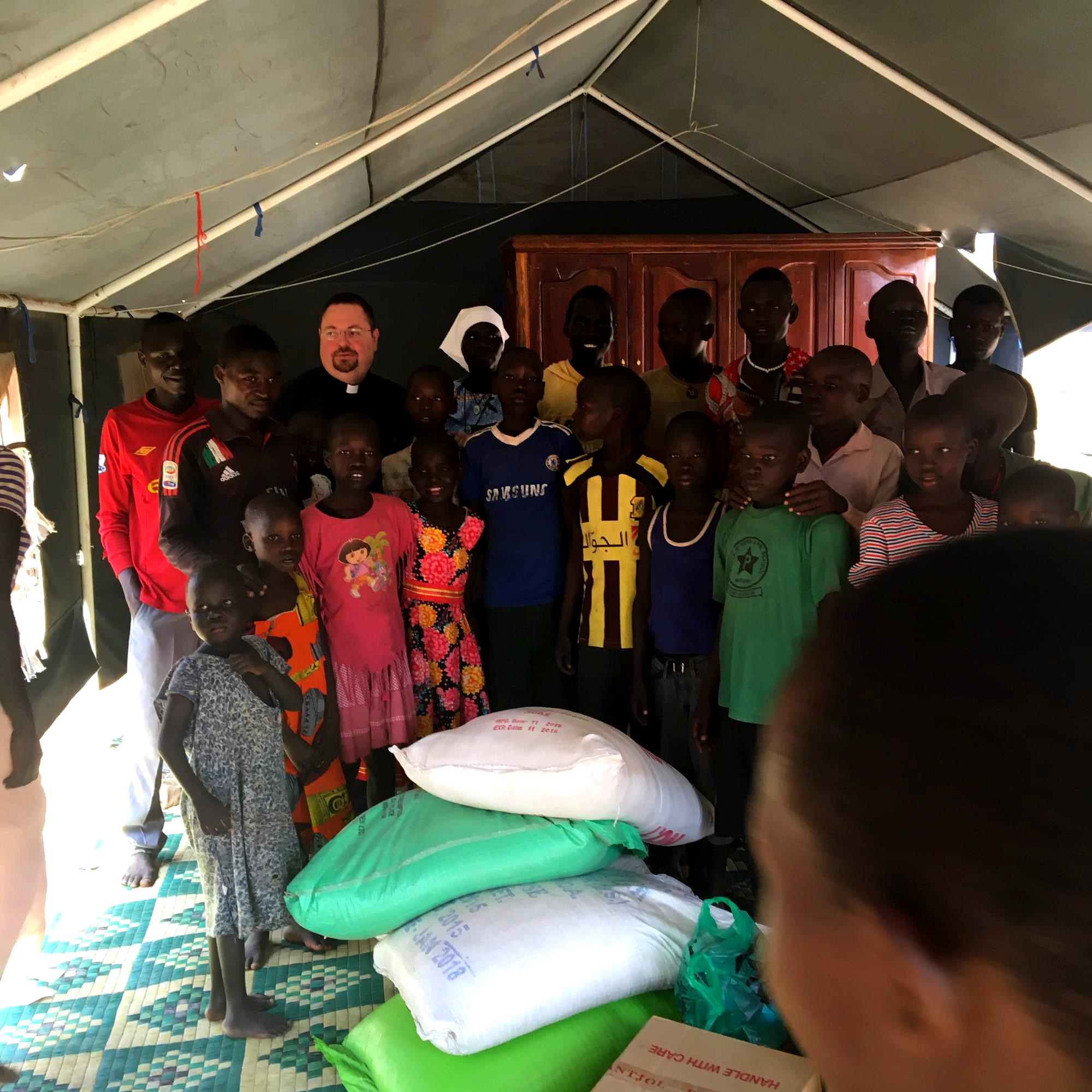
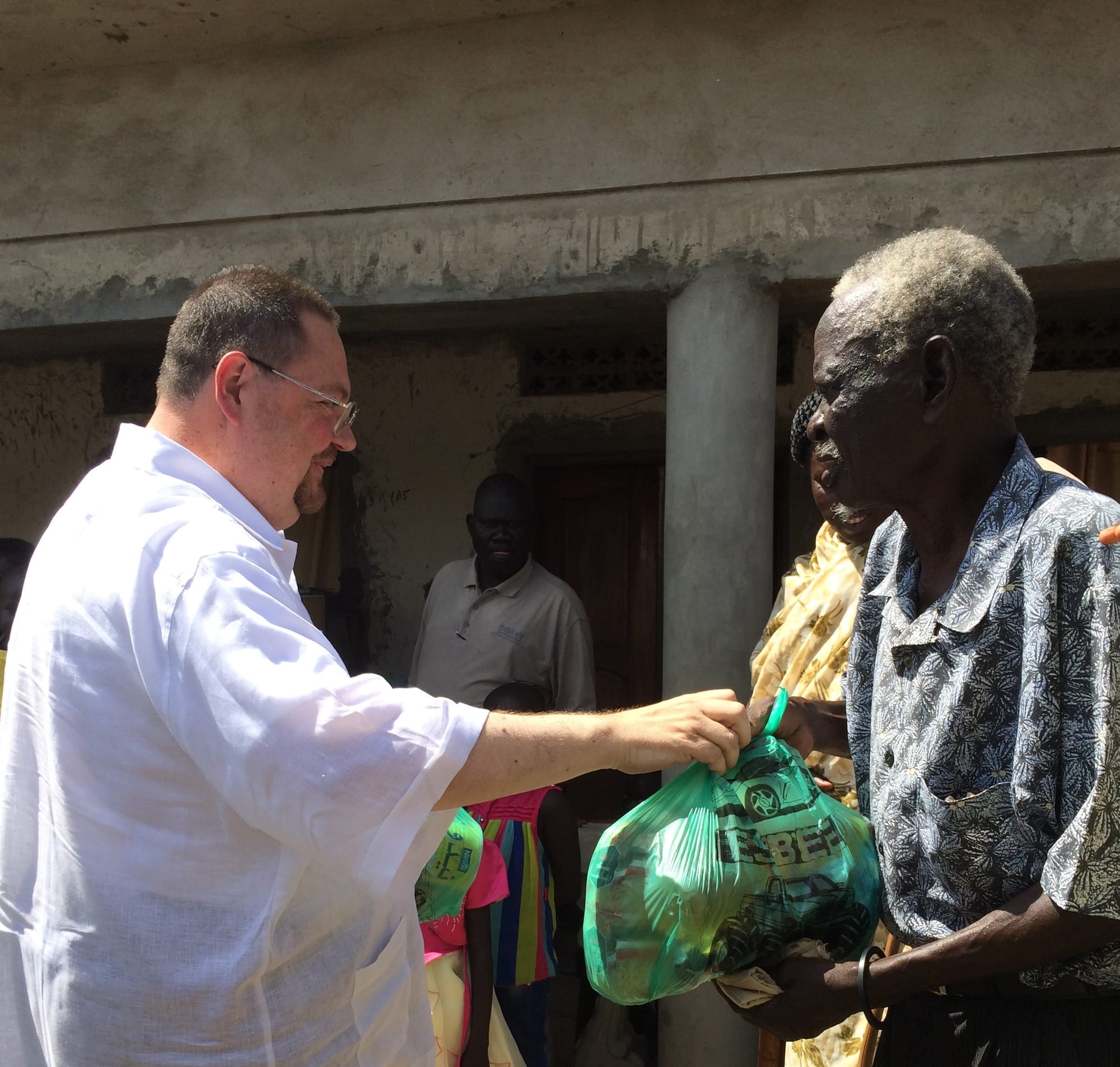
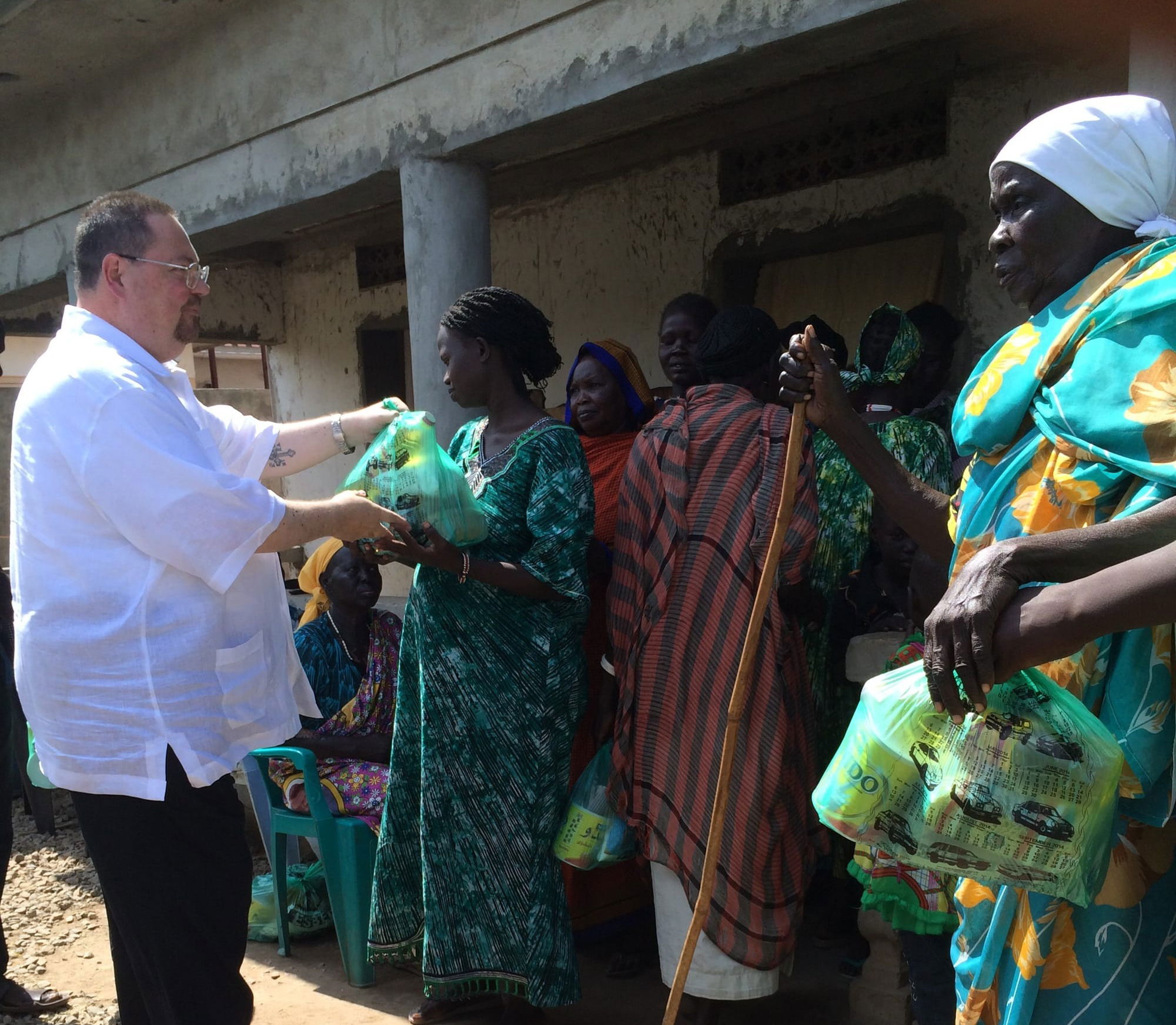
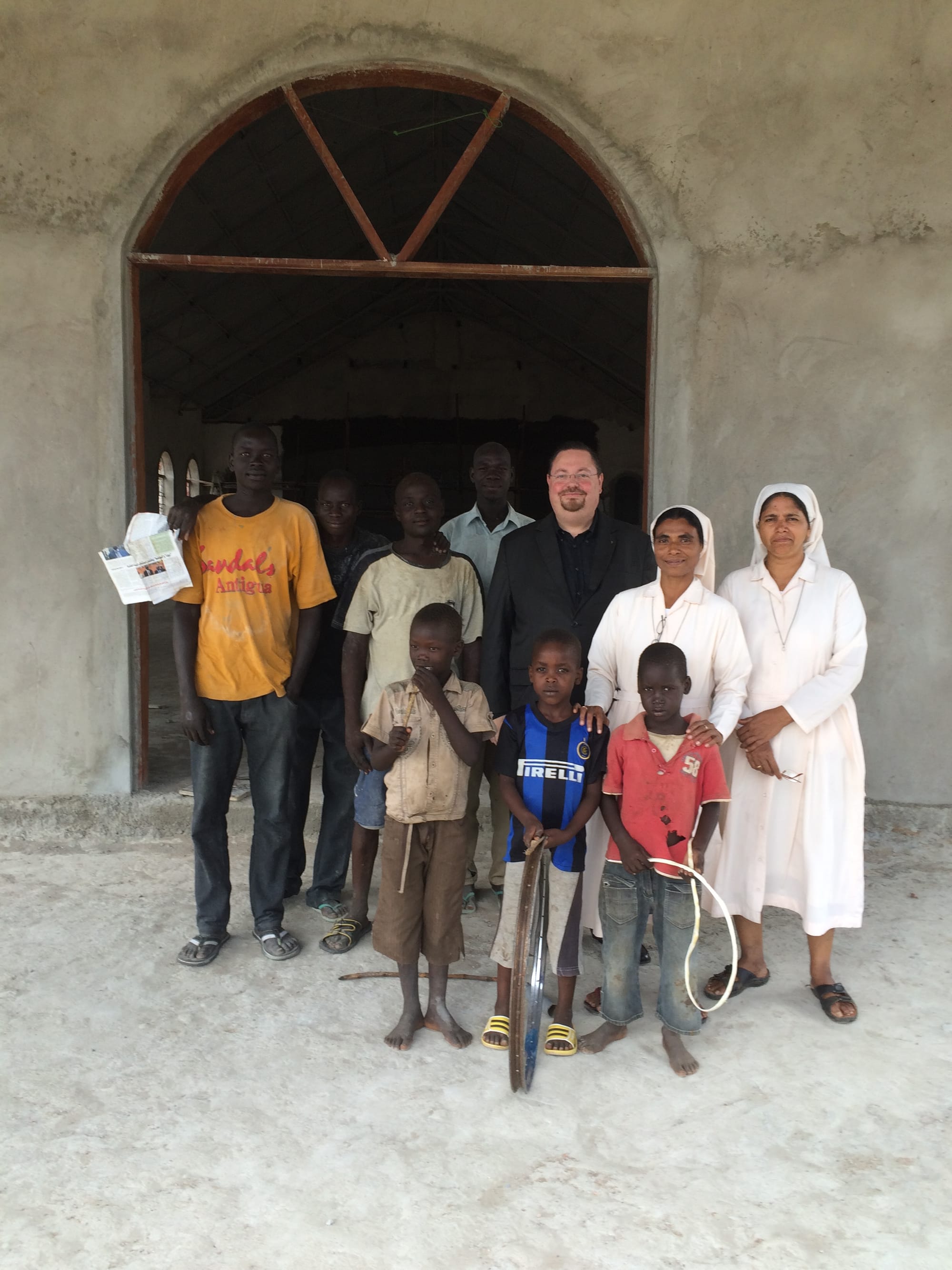
In 2005, he established a missionary school in Elegu, a town in Northern Region of Uganda. It sits across the international border from the town of Nimule, South of Sudan. To aid the children who lost their parents during the civil war, he founded in 2014, an Orphanage in Juba, South of Sudan. The Orphanage took care of 52 children and sheltered displaced women.
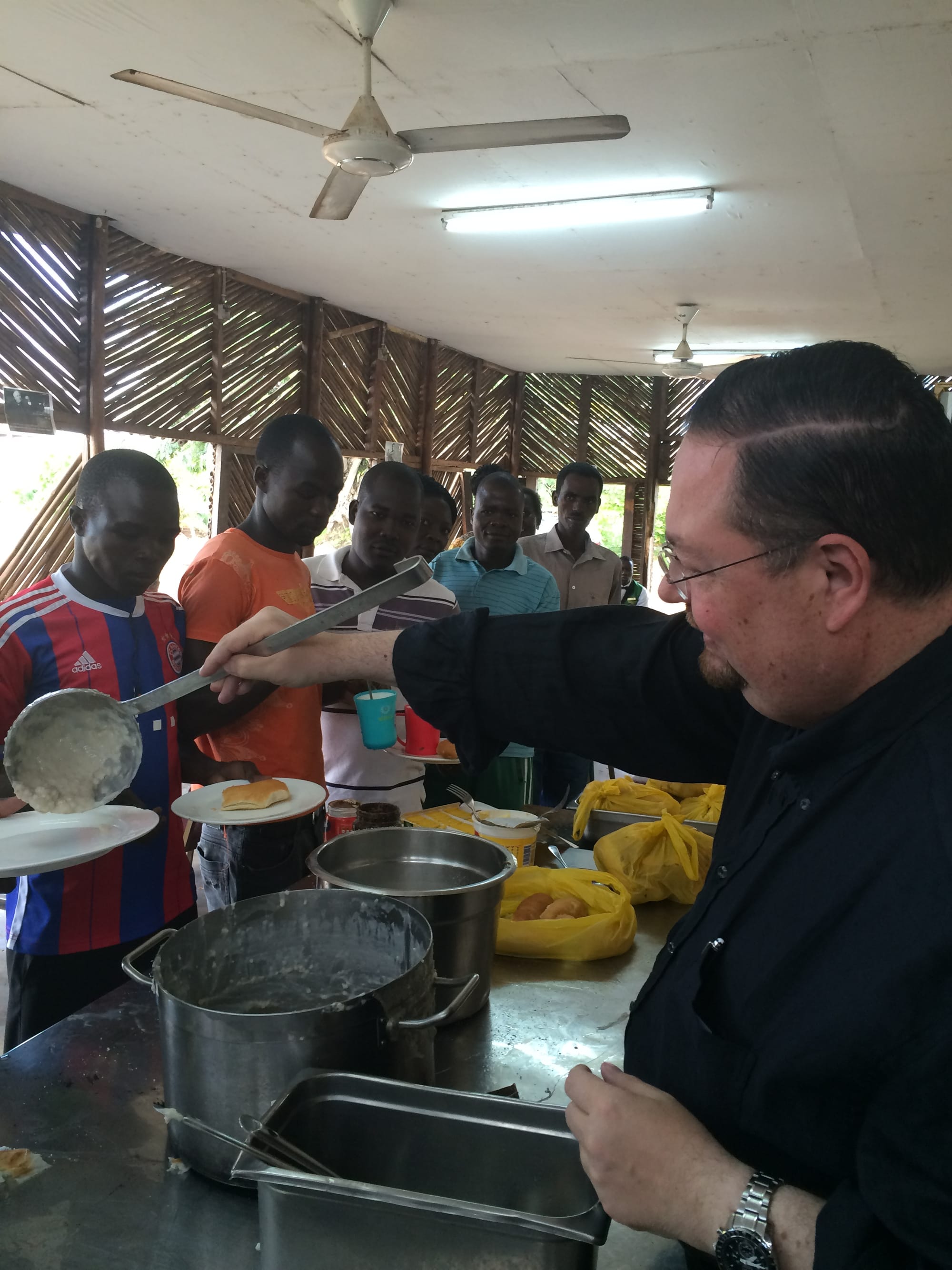
Working in Africa, he had the opportunity to work closely with many International Humanitarian Organizations and was successful in the many projects he was overseeing. In 2016, after serving many years in Central Equatoria and East Africa where he worked closely with Refugees’ Camps, Orphanages and Field Hospitals, and due to political instability, His Eminence left Africa, leaving a legacy through his efforts to assimilate with the indigenous Christians and empower them to embrace Christianity as their own.
His Eminence moved to the United Kingdom to continue his mission and work in the vineyard of our Lord. Upon his arrival to the UK, he founded The Byzantine Orthodox Congregation. The primary objective of the Congregation is to fully promote the Orthodox Christian teaching, to consolidate efforts and support the initiatives of Christians aimed at its development, to promote the expansion of the Christian faith and Eastern Orthodox Byzantine doctrine. The Congregation mission is to be involved in charitable work, to defend Christian traditions, to defend the Christian faith, to engage in humanitarian efforts, to provide support to those in need, to be engaged with theological studies and discussions and to defend the human rights. One of our main purposes is to produce innovative, high-quality research and insights into the rich tapestry and complex dynamics of Christian cultures and societies, past and present.
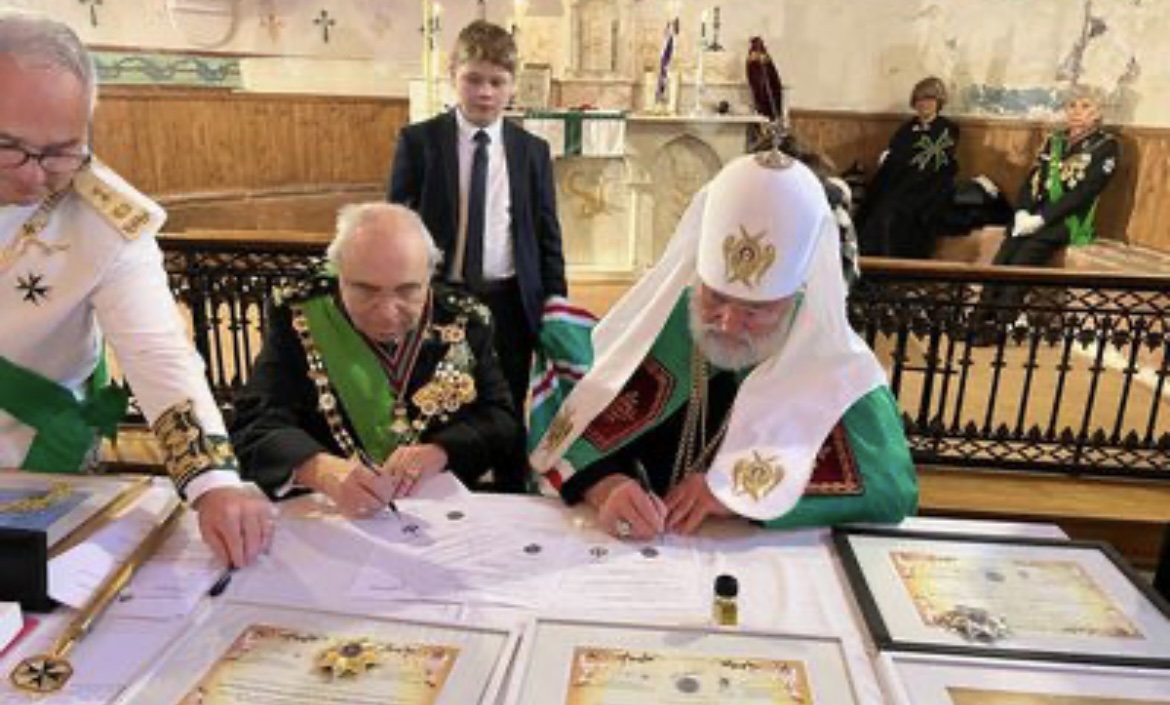
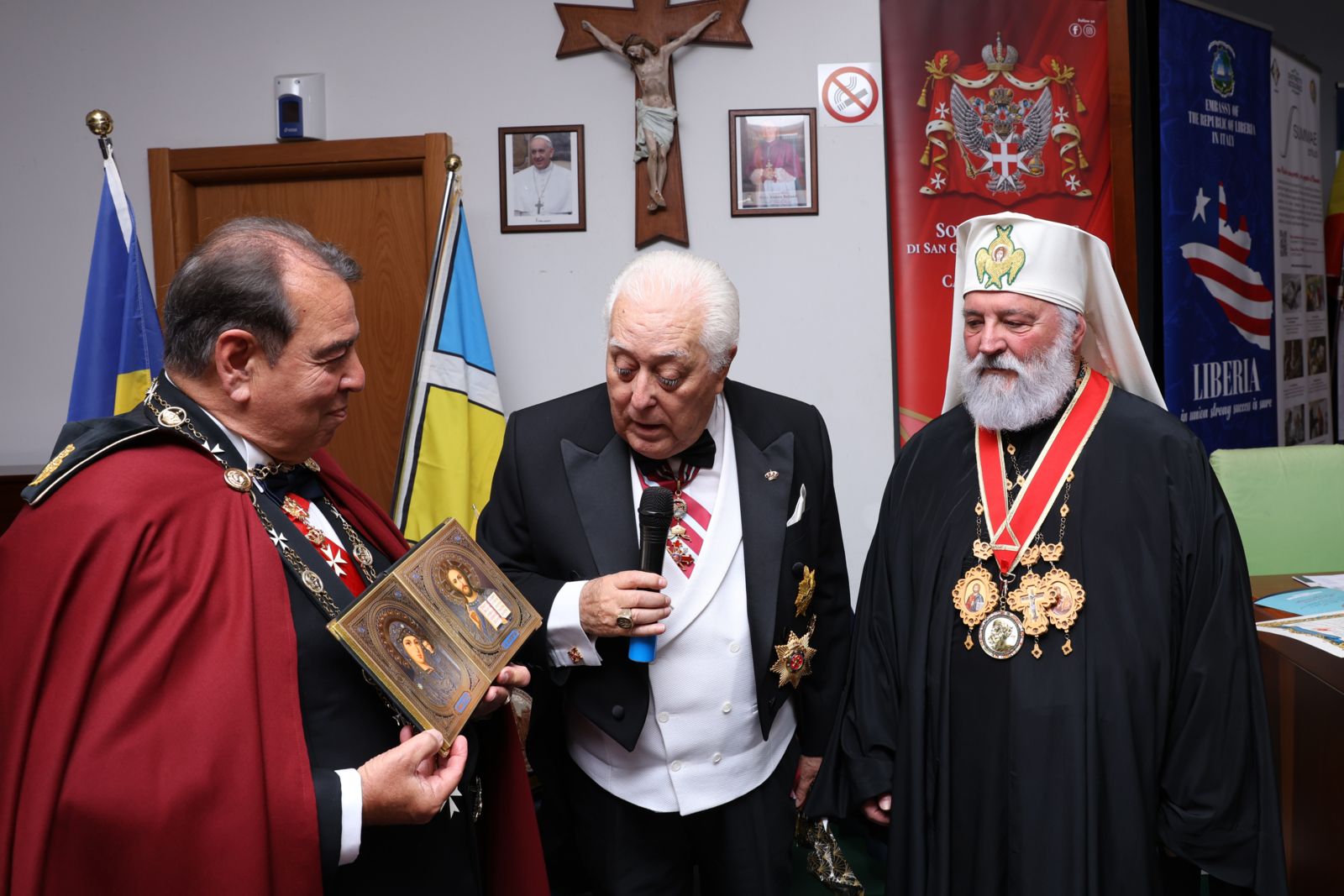
In 2022, his Eminence was awarded by the Sovereign Hospitaller Order of Saint John of Jerusalem, Knights of Malta The Ukrainian Relief Medal of Honour in recognition to his aid and support to the refugees of Ukraine.
On the 26th of April 2023, His Eminence was received [nto the the Patriarcate of Anioce & Jerusalem by His Holiness Patriarch James III , he was elected Metropolitan Archbishop of Great Britain.
In 2026, he was awarded the medal of The Ukrainian Star from Ukraine Priory of the Sovereign Hospitaller Order of Saint John of Jerusalem, Knights of Malta. He was also acknowledged twice by the President of the United State for his support and charity work and as an activist for human rights, and for his services in both social and Christian sides.
His Eminence is proficient in: English, Arabic, Patristic Greek, Classical Hebrew and Aramaic..
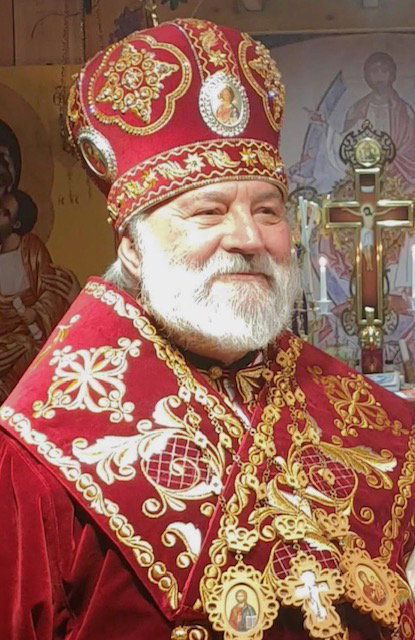
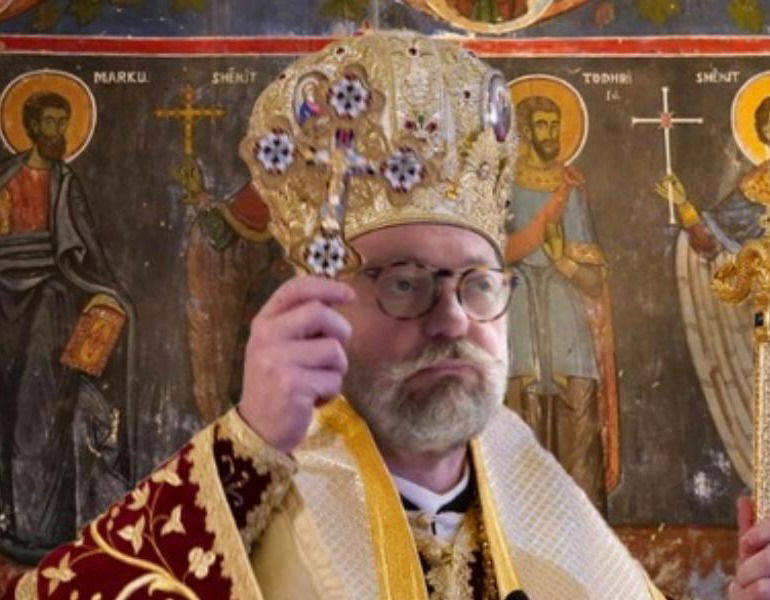
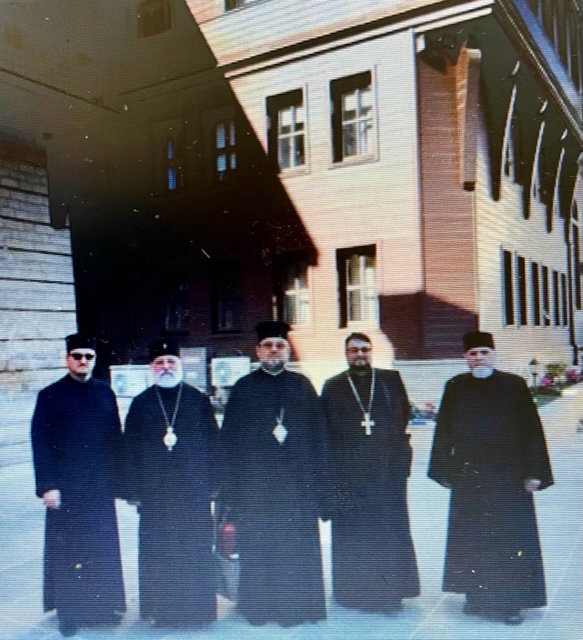
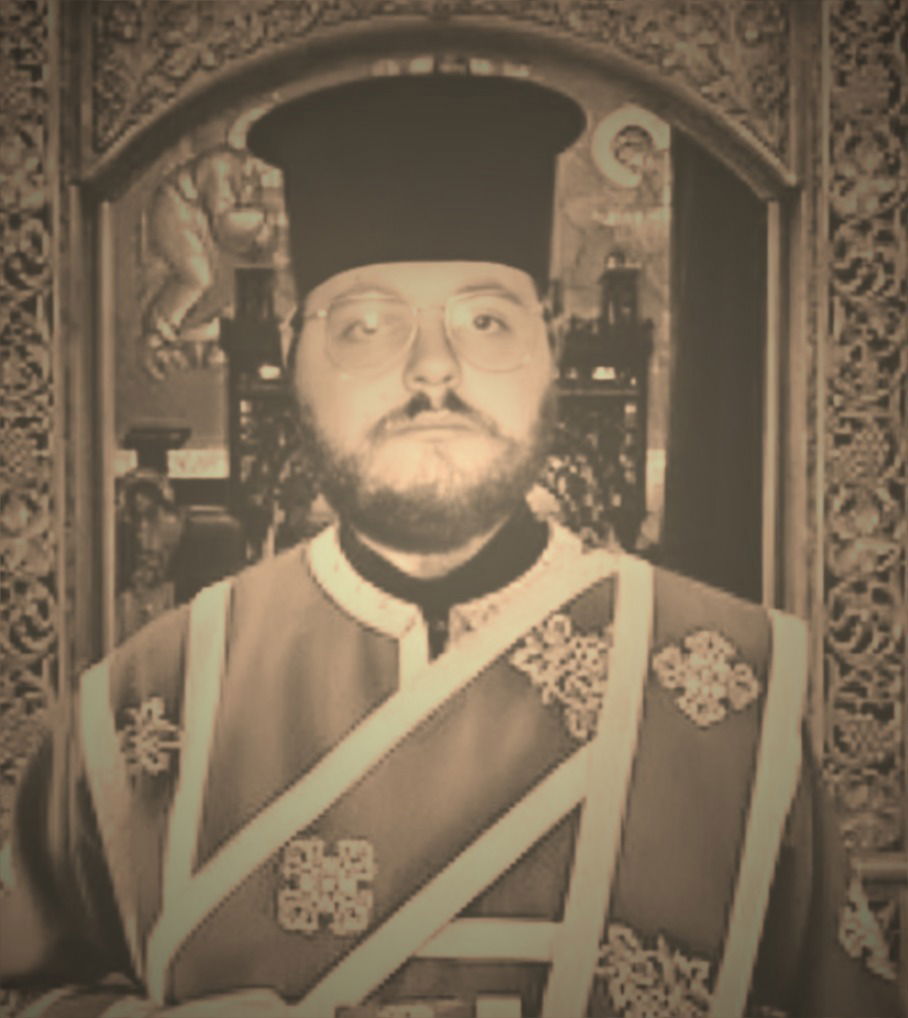
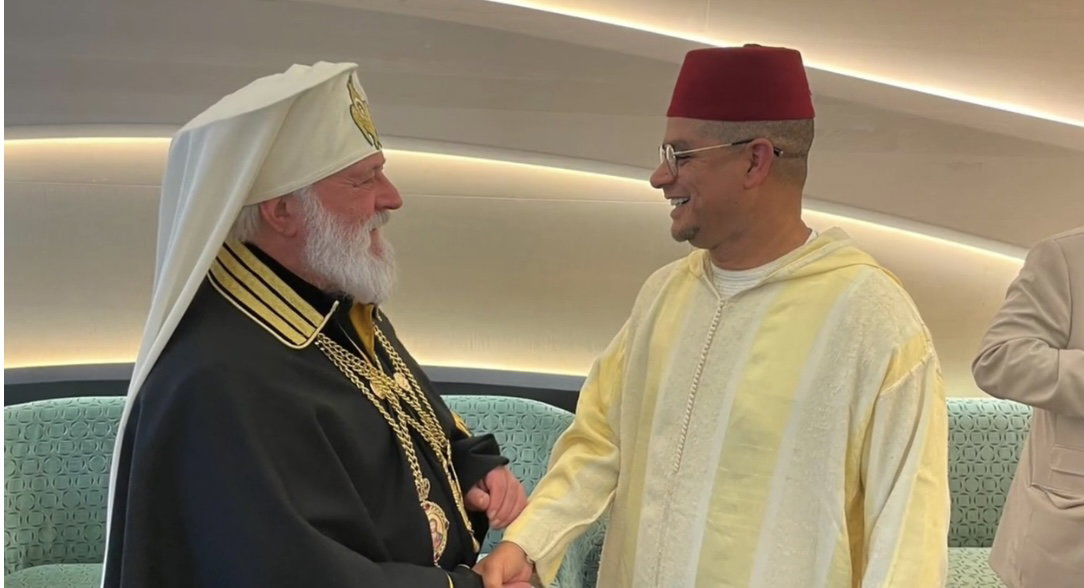
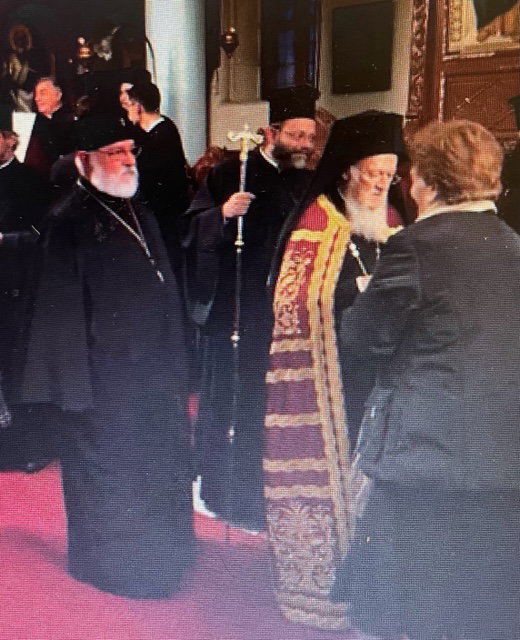
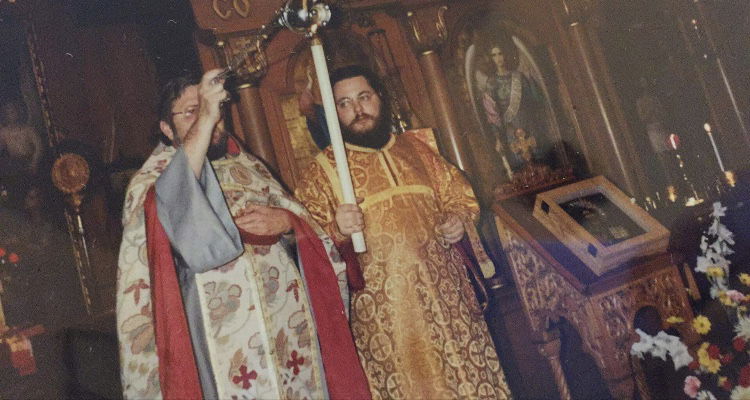
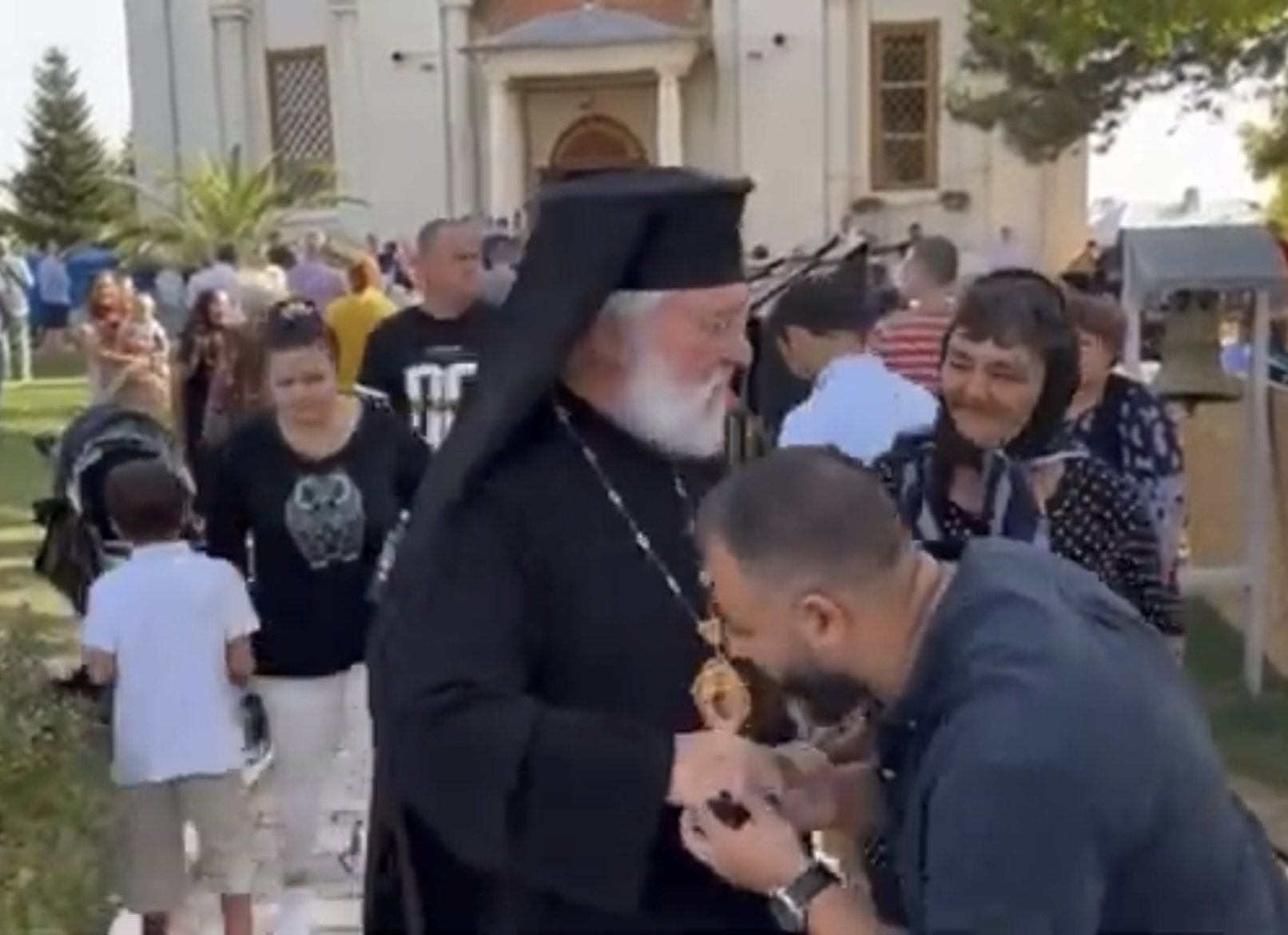
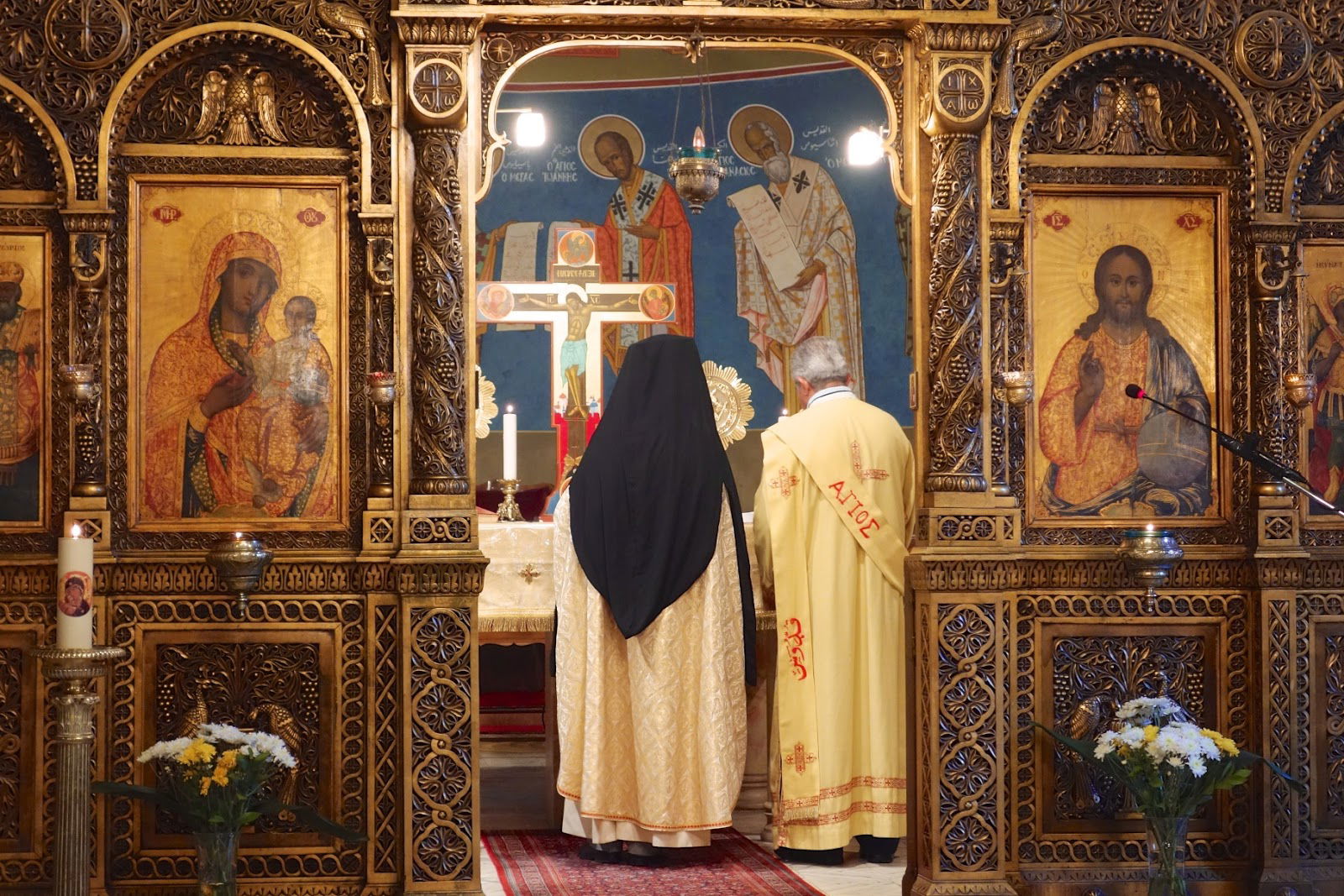
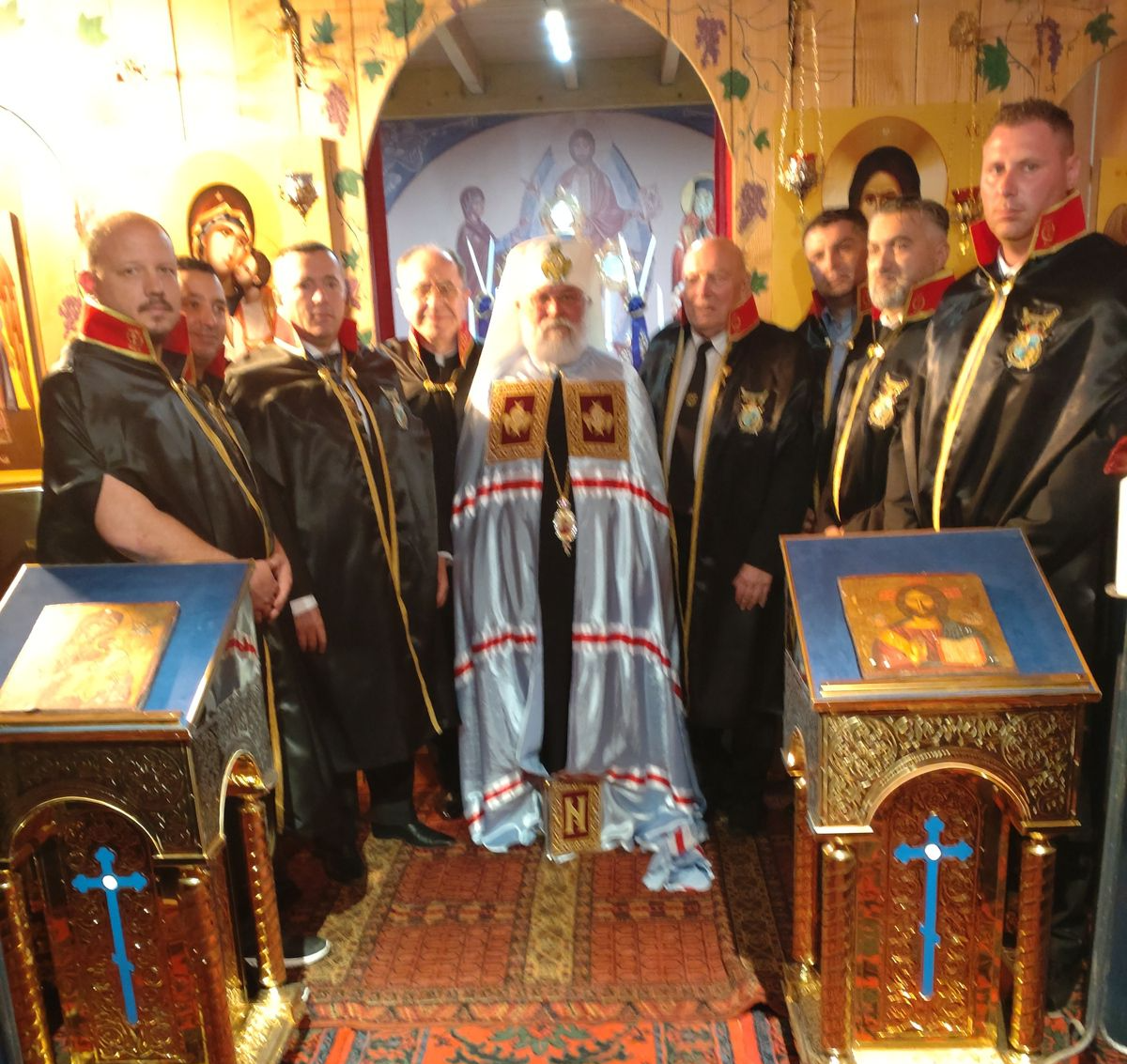
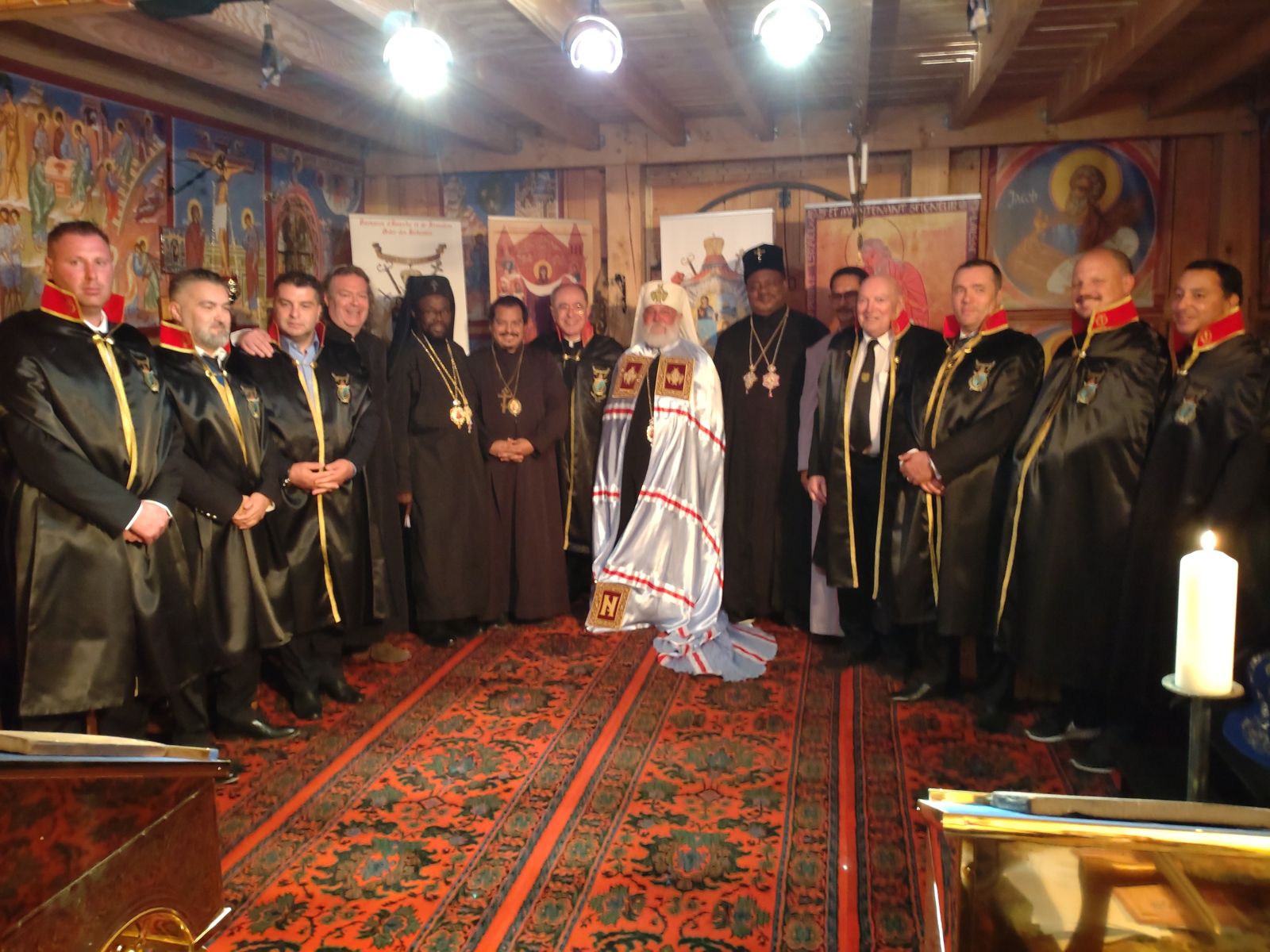
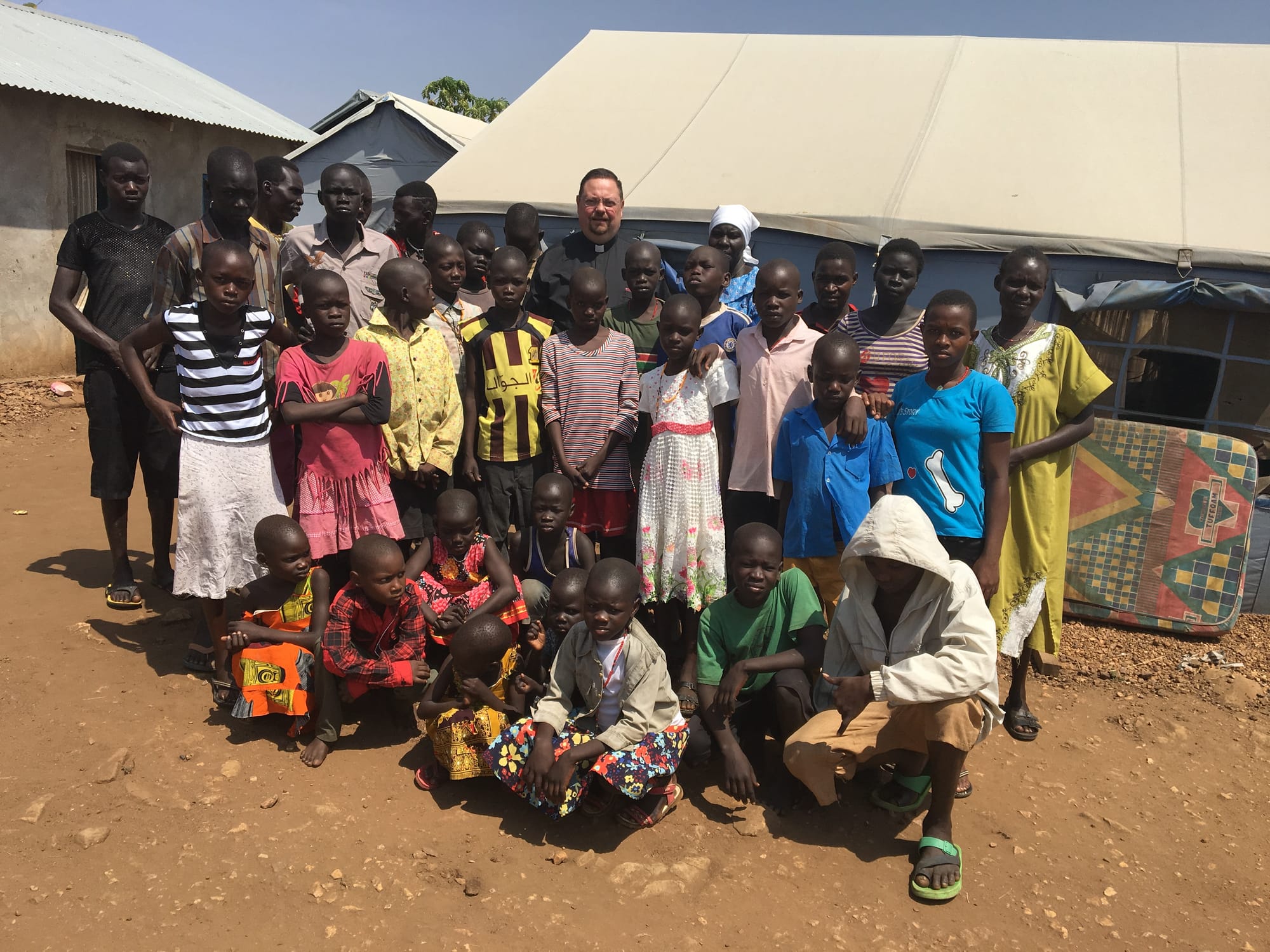
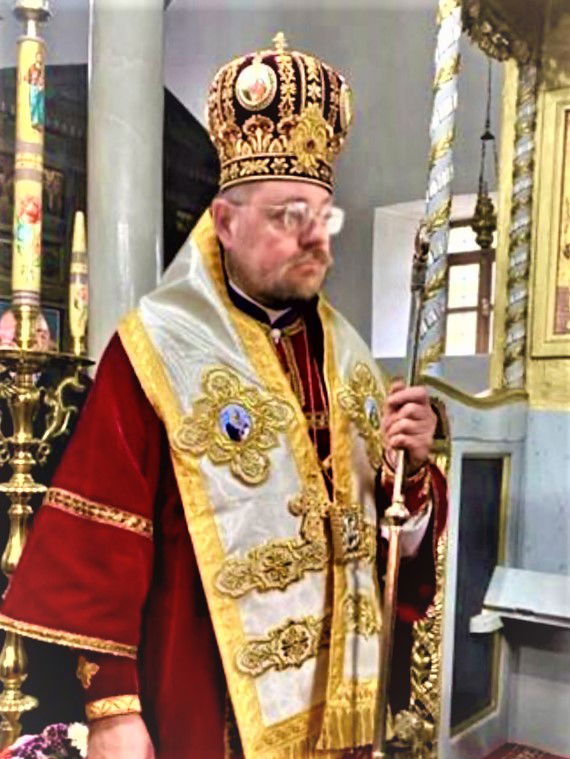
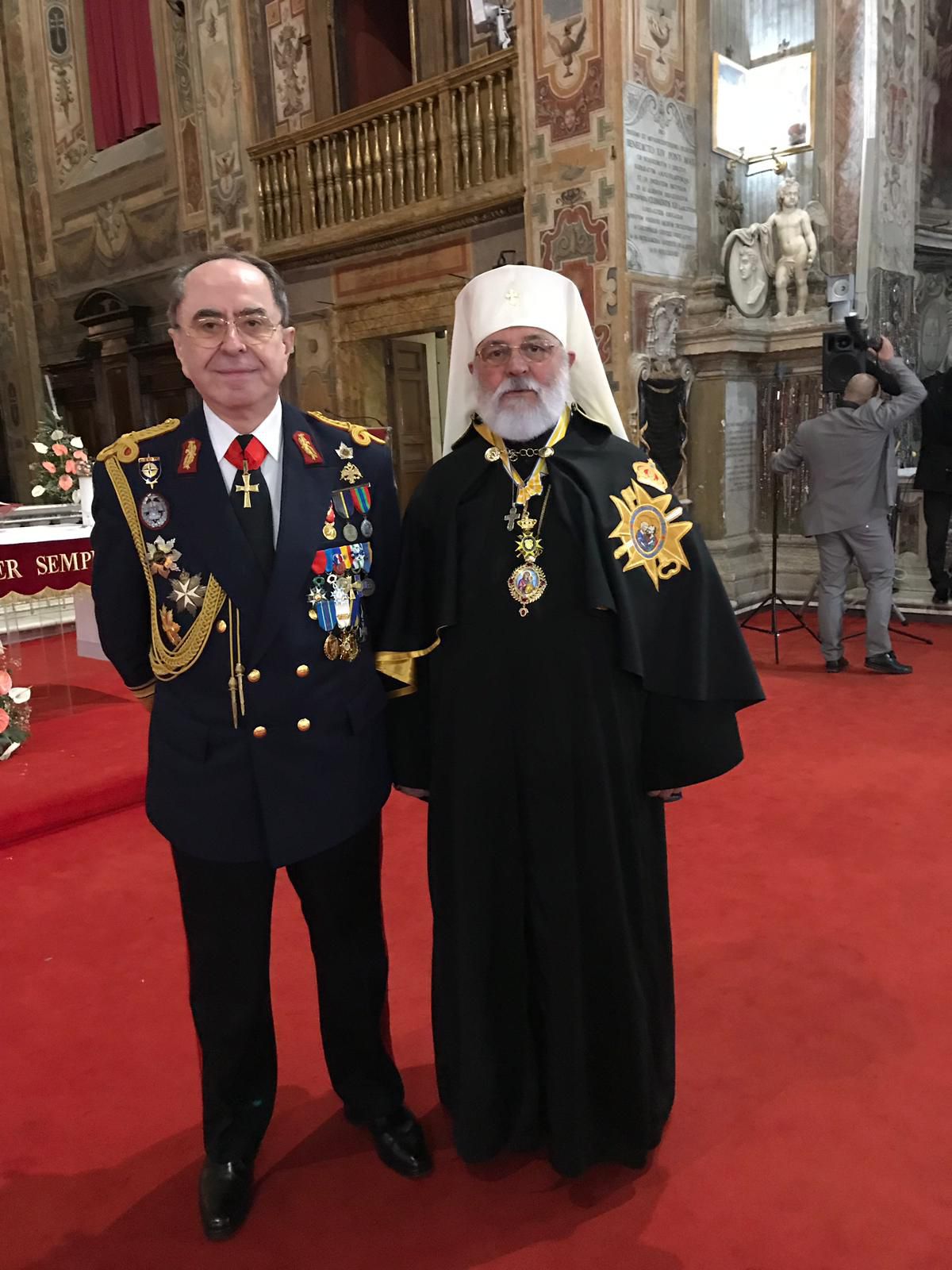
The Orthodox Church is one of the three main Christian groups (the others being Roman Catholic and Protestant). It is made up of a number of self-governing Churches which are either 'autocephalous' (meaning having their own head) or 'autonomous' (meaning self-governing). The Orthodox Churches are united in faith and by a common approach to theology, tradition, and worship. They draw on elements of Greek, Middle-Eastern, Russian and Slav culture. Each Church has its own geographical (rather than a national) title that usually reflects the cultural traditions of its believers. The word 'Orthodox' takes its meaning from the Greek words orthos ('right') and doxa ('belief'). Hence the word Orthodox means correct belief or right thinking.
The Orthodox tradition developed from the Christianity of the Eastern Roman Empire and was shaped by the pressures, politics and peoples of that geographical area. Since the Eastern capital of the Roman Empire was Byzantium, this style of Christianity is sometimes called 'Byzantine Christianity'.
The Orthodox Churches share with the other Christian Churches the belief that God revealed himself in Jesus Christ, and a belief in the incarnation of Christ, his crucifixion and resurrection. The Orthodox Church differs substantially from the other Churches in the way of life and worship, and in certain aspects of theology.
The Holy Spirit is seen as present in and as the guide to the Church working through the whole body of the Church, as well as through priests and bishops.
WHENEVER I READ ABOUT THE ORTHODOX CHURCH, THE WORD TRADITION ALWAYS COMES UP,CAN YOU EXPLAIN BRIEFLY HOW YOU EXPLAIN TRADITION?
The ongoing life of God’s People is called Holy Tradition. The Holy Tradition of the Old Testament is expressed in the Old Testamental part of the Bible and in the ongoing life of the People of Israel until the birth of Christ. This tradition is fulfilled, completed and transcended in the time of the Messiah and in the Christian Church. The New Testamental or Christian Tradition is also called the apostolic tradition and the tradition of the Church.
The central written part of this tradition is the New Testamental writings in the Bible. The gospels and the other writings of the apostolic church form the heart of the Christian tradition and are the main written source and inspiration of all that developed in later ages. This Christian tradition is given over from people to people, through space and time.
Tradition as a word means exactly this: it is that which is “passed on” and “given over” from one to another. Holy Tradition is, therefore, that which is passed on and given over within the Church from the time of Christ’s apostles right down to the present day. Although containing many written documents, Holy Tradition is not at all limited to what is written; it is not merely a body of literature. It is, on the contrary, the total life and experience of the entire Church transferred from place to place and from generation to generation. Tradition is the very life of the Church itself as it is inspired and guided by the Holy Spirit.
Not everything in the Church belongs to its Holy Tradition for not everything in the Church is done by the grace of the Holy Spirit, and not everything in the Church pertains essentially and necessarily to the Kingdom Of God. Some things in the Church are just temporal and temporary things, merely human customs and traditions of no eternal and everlasting value. Such things in themselves are not sinful or wrong. On the contrary, they may be very positive and very helpful to the life of the Church as long as they are not taken to be what they are not. Thus, it is very important in the Church to make the distinction between traditions which are merely earthly and human and passing away and the genuine Holy Tradition which pertains to the heavenly and eternal Kingdom of God. It is also important to recognize that there are also things in the Church which not only do not belong to Holy Tradition, but which are not even to be counted among its positive human traditions. These things which are just sinful and wrong are brought into the life of the Church from the evil world.
The Church in its human form, as an earthly institution, is not immune to the sins of its unholy members. These deviations and errors which creep into the life of the Church stand under the judgment and condemnation of the authentic and genuine Holy Tradition which comes from God. Among the elements which make up the Holy Tradition of the Church, the Bible holds the first place. Next comes the Church’s liturgical life and its prayer, then its dogmatic decisions and the acts of its approved churchly councils, the writings of the church fathers, the lives of the saints, the canon laws, and finally the iconographic tradition together with the other inspired forms of creative artistic expression such as music and architecture.
All of the elements of Holy Tradition are organically linked together in real life. None of them stands alone. None may be separated or isolated from the other or from the wholeness of the life of the Church. All come alive in the actual living of the life of the Church in every age and generation, in every time and place.
As the Church continues to live by the inspiration of the Holy Spirit, the Holy Tradition of the Church will continue to grow and develop. This process will go on until the establishment of the Kingdom of God at the end of the ages.
WHAT CAN YOU TELL US ABOUT ICONS & ICONOGRAPHY?
Icons play a central role in the liturgical and spiritual lives of Byzantine tradition. They adorn the walls and sanctuaries of our Churches and are frequently carried in processions. It is not uncommon for a Byzantine Christian to have an "icon corner" in their home designated for prayer.
Rich theology of icons manifests to us something of the hidden spiritual realities that they represent. Icons are windows into the spiritual world. They help us to look into eternity and they make the historical events of our salvation, as revealed in Scripture, present to us. They are truly "theology in colour." Through their many symbols, icons allow us to touch the mysteries they represent. They tells us the story of what happened in the events they depict. It is common to hear of someone "writing icons" rather than "painting" them.
We do not worship the icons, but only persons they depict. As a picture of a loved one helps us to keep him or her close to our heart, so too do the icons help in our prayer to be in the presence of God, to feel close to Him, the Mother of God, and all the saints and angels. They help us to know that God, the Theotokos, and the saints and angels are always close to us.
HOW ARE YOU GOVERNED?
Our governing structure follows the Eastern Orthodox Churches governing structure that governed itself. As for our Congregation, we are part of the Orthodox Christian Archdiocese of Great Britain of the Antiochian & Jerusalem Patriarchate. The Congregation headed by a Metropolitan Archbishop who is the Primate.
WHAT DO YOU SAY ABOUT THE VIRGIN MARY, THE THEOTOKOS?
We believe that Mary, the Mother of Our Lord Jesus Christ, the Theotokos, the Mother of God, the Mother of the Church and the Queen of Heaven and earth, holds a special place in the faith, the lives and the liturgy of our Church.
The Virgin Mary holds a central place in the hearts and devotion of Orthodox. To understand why she is so important, it is necessary to delve into the teachings and beliefs of Orthodox Churches. First and foremost, both Orthodox and Byzantine Eastern Rite Christians, believe in the Incarnation, which is the belief that God became human in the person of Jesus Christ. This is an essential aspect of Eastern Orthodox theology, as it affirms the belief that God fully entered in a human experience to redeem and restore humanity.
The Virgin Mary played a crucial role in the Incarnation, as she was the one chosen by God to be the mother of Jesus. This means that she was not just a vessel for the conception and birth of Jesus, but rather a fully human and fully divine being. She is therefore seen as a crucial figure in the salvation history of the Church, as she played a key role in the redemption of humanity through her son, Jesus Christ. In addition to her role in the Incarnation, the Virgin Mary is also revered for her holiness and her devotion to God. She is seen as an example of what it means to fully embrace one’s faith and to live a life dedicated to God. She is often depicted as the “new Eve,” as she is seen as reversing the sin of the first woman and becoming a model of obedient faith.
The Virgin Mary is also a source of comfort and intercession for Christians. She is seen as a mother figure who is always ready to listen and to offer her maternal love and protection.
Finally, the Virgin Mary is also revered for her role in the Church. She is seen as a model for the Church itself, as she exemplified the virtues of humility, obedience, and faith. She is also seen as a symbol of the Church’s unity, as she is the mother of all believers and is therefore a unifying figure for the Church.
The Virgin Mary holds a central place in the hearts and devotion of both Orthodox and Catholic Christians due to her role in the Incarnation, her holiness and devotion to God, her role as a source of comfort and intercession, and her role in the Church. She is a deeply revered and beloved figure and her influence and importance cannot be overstated.
HOW YOU UNDERSTAND THE IMMACULATE CONCEPTION?
The Eastern Orthodox Church rejects the Western dogma of the Immaculate Conception, which defines Mary as conceived without original sin, believing instead that she, like all humans, inherited original sin but was purified later by God's grace through the Holy Spirit, enabling her free-willed "yes" to bear Christ. While Orthodoxy highly venerates the Theotokos (Mother of God) as "all-pure" and sinless in life, we attribute this to her obedience and sanctification, not a special conception, seeing the Catholic doctrine as unnecessary and problematic for free will.
WHAT DO YOU SAY ABOUT THE COMMUNION OF SAINTS?
We believe in the communion of Saints, and the fellowship of the whole Church in Glory, the Church Militant and the Church Suffering. It holds to the honouring of Saints, and the prayers for their intercession for both the Church Militant and Suffering.
WHAT YOU SAY ABOUT LIFE AFTER DEATH?
Each person is subject to what is called "private judgment" and to what is called "general judgment”. The private judgment is what an individual receives immediately after death. The souls of the righteous, who have received a "positive" private judgment have a certain "foretaste" of Heaven, and the souls of unrepentant sinners who received a "negative" private judgment have a "foretaste" of hell. However, neither Paradise nor the Inferno even exist yet, because the final division of all humans into those who are saints and those who are damned will occur only after the Second Coming of Christ and the general resurrection of the dead (Matthew 25: 31-46). Even though a person whose soul is separated from his/her body is not able to repent anymore, and thus cannot change the private judgment by him- or herself, the prayers of others, the prayers of the Church, and especially the prayers of the Most Holy Mother of God the Theotokos still can change the destiny of those who received a negative private judgment.
WHERE IS YOUR STAND ON THE FILIOQUE POSITION?
We hold the solid and unquestioning beliefs as set out in the Creed of Nicaea/Constantinople of AD 381. We maintain that, whilst theological debate may continue regarding the Filioque clause, no Church and no Bishop or Bishops, nor successive Synods or Councils may change, alter, add to, or take away from, a Creed once it is proclaimed by a legitimate General Ecumenical Council, and that such Sacred Tradition is held as absolute by the Orthodox Church.
HOW MANY SACRAMENTS YOY HAVE?
We recognise and affirm the Seven Sacraments of the Church: Baptism. Chrismation (Confirmation). Communion (Holy Eucharist). Holy Ordination. Penance. Anointing of the sick (Holy Unction of the sick and Extreme Unction for the dying). Holy Matrimony / Marriage.
WHAT IS YOUR UNDERSTANDING TO MARRIAGE?
In our understanding, marriage is the oldest institution of divine law because it was instituted simultaneously with the creation of Adam and Eve, the first human beings (Gen 2:23). Since its origin, this union not only implies the spiritual communion of a married couple a man and a woman but also assured the continuation of humanity. As such, the marriage of man and woman, which was blessed in Paradise, became a holy mystery, as mentioned in the New Testament where Christ performs His first sign, turning water into wine at the wedding in Cana of Galilee, and th us reveals His glory (Jn 2:11).
The mystery of the indissoluble union between man and woman is an icon of the unity of Christ and the Church (Eph 5:32). The Orthodox Church consider the union of man and woman in Christ constitutes “a small church” or an icon of the Church.
Through God’s blessing, the union of man and woman is elevated to a higher level, for communion is greater than individual existence because it initiates the spouses into the order of the Kingdom of the All-Holy Trinity. A necessary condition of marriage is faith in Jesus Christ, which must be shared by the bridegroom and the bride, man and woman. Consequently, unity in Christ is the foundation of marital unity. Thus, marital love blessed by the Holy Spirit enables the couple to reflect the love between Christ and the Church as a mystery of the Kingdom of God—as the eternal life of humanity in the love of God. As for civil marriage between a man and a woman registered in accordance with the law lacks sacramental character since it is a simple legalized cohabitation recognized by the State, different from a marriage blessed by God and the Church.
The members of the Church who contract a civil marriage ought to be regarded with pastoral responsibility, which is necessary to help them understand the value of the sacrament of marriage and the blessings connected with it.
The Orthodox Church does not allow for her members to contract same-sex unions or any other form of cohabitation apart from marriage. The Orthodox Church exerts all possible pastoral efforts to help her members who enter such unions understand the true meaning of repentance and love as blessed by the Church. The grave consequences brought about by this crisis of the institutions of marriage and the family are manifested in the frightening increase in the number of divorces, abortions, and other problems of family life. These consequences constitute a great challenge to the mission of the Church in the modern world, which is why the shepherds of the Church are obligated to make every possible effort to address these problems.
The Church lovingly invites her children and all people of good will to defend this fidelity to the sacredness of the family.
DO YOU ORDAIN WOMEN?
No, we do not ordain women to the Deaconate, Priesthood or Episcopate. We do not ordain women due to Holy Tradition, which mandates that ordination is reserved for men, following the example of Jesus Christ who chose only men as His Apostles. This tradition is rooted in scripture and the continuous practice of the Church, which views the ordained priesthood as a specific representation of Christ, not as a matter of gender equality or human rights.
The Church's position is that it has no authority to innovate on this established order and that changing it would require a new divine revelation, not just societal shifts.
Key Reasons for the Male Priesthood:
Apostolic Tradition:
Christ selected only men as His Apostles, and this order was followed and maintained by the Apostles themselves and their successors for the first 2,000 years of the Church.
Theological Representation:
The priest is seen as embodying Christ during the liturgy; Eastern theology holds that the male priest represents the "priestly Christ".
Scriptural Basis:
Scripture does not provide an example of Jesus ordaining women, and Saint Paul teaches that women should not have authority over men within the Church.
Unchanging Tradition:
We believe in preserving the faith and tradition handed down from the Apostles and sees no basis for introducing women's ordination.
Key Arguments Against Changing the Tradition:
Lack of New Revelation:
For the Church to change such a foundational aspect of its order, a powerful new revelation equivalent to the New Testament would be needed, which has not occurred.
Not a Matter of Social Norms:
The Church does not believe it should conform to evolving societal views on women's roles, as these are seen as separate from sacred tradition and scripture.
The male priesthood is not considered an issue of sexism, worth, or inequality, but rather a matter of a divinely established pastoral office that represents Christ in a particular way.
No Innovation in Faith:
We are committed to non-innovation in matters of faith means that changing the male priesthood is seen as an impossible and radical alteration of established practice.
WHAT IS YOUR UNDERSTANDING TO THE ROLE OF WOMEN IN THE CHURCH?
The role of a woman in the Church is the same as the role of a man in the Church. It is to be a member of the body of Christ. As part of this body, the Church, we are all called to listen to God. Being part of the “royal priesthood” means being a servant, making a sacrifice of ourselves for Christ, just as Christ did for us. Christ, the Archpriest, gave us this example. We have many male and female Saints who have given us great examples of “priestly” ministry as well as people in our own lives. Our challenges as a young woman or man are to look beyond some of the misconceptions that exist in the church and cultivate the gifts that God has given us. When we use them to serve humanity in His name, then we will have found our special role in the Church.
It must be noted that the Eastern Church Tradition elevates woman as a person by giving her a vital role in the development of young people and their presence in society. Contrary to timeless perceptions and realities, which want women to be marginalized, the Church suspends any discrimination between the sexes by considering men and women as equal members of a Body, endowed with the same spiritual gifts and with a common goal of Communion with God.
The exaltation of woman finds its highest expression in the face of the Virgin Mary and especially in her contribution to the incarnation of the Son and Word of God. The Theotokos is the ideal, beauteous and wonderful woman, a constant model of every Christian. Throughout the history of the Church, we find women role models, holy women who with their virtue served both God and man. The Canaanite and the bleeding women teach with their faith and perseverance. The weeping prostitute becomes the supreme example of repentance. The Samaritan woman – Saint Photini, Priscilla, Lydia, Saint Thekla and countless other women contribute to the work of preaching. Emmelia, Nonna, Anthousa become real mothers.
Many women today are dedicated to the same ministry work, in the context of a variety of activities of their parish, whether they are related to charity, or to catechism and Christian education in general, or to other spiritual events (camps, conferences, etc.). The participation of women in this ministry work is inextricably linked to the special feminine nature and spirituality.
In this way, the woman utilizes her personal and innate gifts, dynamically offering her share in the liturgical life of the Church as a worship community. No one can deny that the life of a Parish is largely based on the love, sacrifice and offering of all these women. The uniqueness of the woman and the functions she performs in the Church make her undoubtedly a member equal to the man. In the Eastern Tradition, respect for individuality is a fundamental principle.
The fact that women are excluded from the sacrament of the priesthood, means in no way a devaluation of the Woman, as some want to see it. Priesthood is not an ecclesiastical profession, nor is it of a formal or customary nature. It is a Mystery instituted by Jesus Christ himself, given by Him only to the Apostles and to the successors of their work, the Men-Clergy. Why this possibility was given only to males is interpreted humanely as due to purely practical and biological reasons. Man, after all, is called with faith – trust in Him to accept and live the divine truths and actions. This fact, however, does not detract from the value of the woman as a person. After all, the possibility of sainthood exists freely and equally in both sexes. Let us not forget the following: The body has many parts, and each part has its own mission, which with its value and uniqueness contributes to the overall harmony.
HOW DO YOU UNDERSTAND FREEDOM?
Freedom is one of God’s greatest gifts to the human being. He who created man in the beginning made him free and self-determined, limiting him solely by the laws of the commandment (Gregory the Theologian, Homily 14, On Love for the Poor, 25. PG 35, 892A). Freedom renders the human being capable of progressing toward spiritual perfection; yet it also includes the risk of disobedience as independence from God and consequently the fall, which tragically gives rise to evil in the world.
WHAT IS YOUR UNDERSTANDING TO THE SPECIAL PASTORAL CARE FOR YOUNG PEOPLE?
The Church’s special pastoral care for young people represents an unceasing and unchanging Christ-cantered process of formation. Of course, the pastoral responsibility of the Church also extends to the divinely granted institution of family, which has always been and must always be founded on the sacred mystery of Christian marriage as a union between man and woman, as reflected in the union of Christ and His Church (Eph 5:32). This is especially vital considering attempts in certain countries to legalize and in certain Christian communities to justify theologically other forms of human cohabitation that are contrary to Christian tradition and teaching. The Church hopes for the recapitulation of everything in the Body of Christ, it reminds every person coming into the world, that Christ will return at His Second Coming judging the living and the dead (1 Pet 4, 5) and that His Kingdom shall have no end (Lk 1:33)
WHAT’S YOU’RE UNDERSTANDING ON ABORTION?
The abortion of a child already conceived is strictly forbidden in our faith and cannot be justified in any way, except perhaps with the greatest moral risk and with the most serious penitence in the most extreme cases such as that of irreparable damage to the mother or her probable death in the act of childbirth. In such extreme situations, the mother alone must take upon herself the decision, and all must be prepared to stand before God for the action, asking His divine mercy.
WHAT IS YOUR UNDERSTANDING TO SUICIDE?
As Christians, we believe that life is a gift from God. The All-Holy and Life-Giving Trinity created all things and granted life to all living creatures. Out of His love, God made us, human beings, in His own divine image and likeness, entrusting us as stewards–not owners–of our lives, blessing us with the capacity of freedom, and calling us to a life of loving communion. Christ identifies the very purpose of His incarnation and earthly mission with the gift of life, proclaiming, “I came that they may have life, and have it more abundantly” (John 10:10).
Remaining faithful to the Lord’s Gospel, the Church invites all human beings to enter in the living body of Christ, to be sustained through the life-giving sacraments, and to preserve and perpetuate both spiritual and physical life. Suicide is the intentional causing of one’s own physical death through a decisive act. Suicide is regarded generally with the Eastern Orthodox Catholic Tradition as a rejection of God’s gift of physical life, a failure of stewardship, an act of despair, and a transgression of the sixth commandment, “You shall not kill” (Exodus 20:13). On one hand, the Church condemns acts of suicide and declines to offer a funeral service and burial to a suicide victim.
On the other hand, the Church acknowledges that while human freedom was not annihilated by the Fall, both spiritual factors (like acedia- spiritual torpor) and physical factors (like depression) can severely compromise a person’s ability to reason clearly and act freely.
Regarding suicide, the Church takes very seriously such spiritual and physical factors and responds pastorally by offering a funeral service and burial to suicide victims whose capacities for judgment and action were found to be significantly diminished. Depression is an illness caused by both medical and psychological factors. It is characterized by physical changes such as loss of appetite, weight loss, and in some cases, weight gain. Both insomnia and hypersomnia are common symptoms.
The primary focus of the Church and its pastoral ministry in cases of suicide is on the living, the family and friends of the deceased. Those left behind carry a great burden–of hurt, guilt, and shame–with the realization that their loved one has taken his/her own life. They look to the Church and especially to the parish family, for strength and hope regarding the deceased, and for the support and love they themselves urgently need.
Far more cases of suicide than previously recognized involve spiritual an
d/or physiological factors that significantly compromise a person’s rationality and freedom. The parish priest should always consult with his diocesan hierarch to discern the proper course of action, the general pastoral recommendation being that a church burial and memorial services could be granted unless there were an absence of significantly diminished capacities.
statment
On Freedom:
Freedom is one of God’s greatest gifts to the human being. He who created man in the beginning made him free and self-determined, limiting him solely by the laws of the commandment (Gregory the Theologian, Homily 14, On Love for the Poor, 25. PG 35, 892A). Freedom renders the human being capable of progressing toward spiritual perfection; yet, it also includes the risk of disobedience as independence from God and consequently the fall, which tragically gives rise to evil in the world.
On Peace & Justice:
The Church has diachronically recognized and revealed the centrality of peace and justice in people’s lives. The very revelation of Christ is characterized as a gospel of peace (Eph 6:15), for Christ has brought peace to all through the blood of his Cross (Col 1:20), preached peace to those afar and near (Eph 2:17), and has become our peace (Eph 2:14). This peace, which surpasses all understanding (Phil 4:7), as the Lord Himself told His disciples before His passion, is broader and more essential than the peace promised by the world: peace I leave with you, my peace I give to you; not as the world gives do I give to you (Jn 14:27). This is because the peace of Christ is the ripe fruit of the restoration of all things in Him, the revelation of the human person’s dignity and majesty as an image of God, the manifestation of the organic unity in Christ between humanity and the world, the universality of the principles of peace, freedom, and social justice, and ultimately the blossoming of Christian love among people and nations of the world. The reign of all these Christian principles on earth gives rise to authentic peace. It is the peace from above, for which the Orthodox Church prays constantly in its daily petitions, asking this of the almighty God, Who hears the prayers of those that draw near to Him in faith.
On Peace & the Aversion of War:
The Church of Christ condemns war in general, recognizing it as the result of the presence of evil and sin in the world: Where do wars and fights come from among you? Do they not come from your desires for pleasure that war in your members? (Jm 4:1). Every war threatens to destroy creation and life.
This is most particularly the case with wars with weapons of mass destruction because their consequences would be horrific not only because they lead to the death of an unforeseeable number of people, but also because they render life unbearable for those who survive. They also lead to incurable diseases, cause genetic mutations and other disasters, with catastrophic impact on future generations.
The amassing not only of nuclear, chemical, and biological weapons, but of all kinds of weapons, poses very serious dangers inasmuch as they create a false sense of superiority and dominance over the rest of the world. Moreover, such weapons create an atmosphere of fear and mistrust, becoming the impetus for a new arms race.
The Church of Christ, which understands war as essentially the result of evil and sin in the world, supports all initiatives and efforts to prevent or avert it through dialogue and every other viable means. When war becomes inevitable, the Church continues to pray and care in a pastoral manner for her children who are involved in military conflict for the sake of defending their life and freedom, while making every effort to bring about the swift restoration of peace and freedom.
The Church resolutely condemns the multifaceted conflicts and wars provoked by fanaticism that derives from religious principles. There is grave concern over the permanent trend of increasing oppression and persecution of Christians and other communities in the Middle East and elsewhere because of their beliefs; equally troubling are the attempts to uproot Christianity from its traditional homelands. As a result, existing interfaith and international relations are threatened, while many Christians are forced to abandon their homes. Christians throughout the world suffer with their fellow Christians and all those being persecuted in this region, while also calling for a just and lasting resolution to the region’s problems.
Wars inspired by nationalism and leading to ethnic cleansing, the violation of state borders, and the seizure of territory are also condemned.
On the Attitude of the Church toward Discrimination:
The Lord, as King of righteousness (Heb 7:2-3) denounces violence and injustice (Ps 10:5), while condemning the inhumane treatment of one’s neighbor (Mt 25:41-46; Jm 2:15-16). In His Kingdom, reflected and present in His Church on earth, there is no place for hatred, enmity, or intolerance (Is 11:6; Rom 12:10).
The Church position on this is clear. She believes that God has made from one blood every nation of men to dwell on all the face of the earth (Acts 17:26) and that in Christ there is neither Jew nor Greek, there is neither slave nor free, there is neither male nor female: for you are all one in Christ Jesus(Gal 3:28). To the question: Who is my neighbor?, Christ responded with the parable of the Good Samaritan (Lk 10:25-37). In so doing, He taught us to tear down all barriers erected by enmity and prejudice. The Church confesses that every human being, regardless of skin colour, religion, race, sex, ethnicity, and language, is created in the image and likeness of God, and enjoys equal rights in society. Consistent with this belief, the Church rejects discrimination for any of the aforementioned reasons since these presuppose a difference in dignity between people.
The Church, in the spirit of respecting human rights and equal treatment of all, values the application of these principles in the light of her teaching on the sacraments, the family, the role of both genders in the Church, and the overall principles of Church tradition. The Church has the right to proclaim and witness to her teaching in the public sphere.
On the Mission of the Church as a Witness of Love through Service:
In fulfilling her mission in the world, the Church actively cares for all people in need, including the hungry, the poor, the sick, the disabled, the elderly, the persecuted, those in captivity and prison, the homeless, the orphans, the victims of destruction and military conflict, those affected by human trafficking and modern forms of slavery. The Church’s efforts to confront destitution and social injustice are an expression of her faith and the service to the Lord, Who identifies Himself with every person and especially with those in need: Inasmuch as you did it to one of the least of these my brethren, you did it to me (Mt 25:40). This multidimensional social service enables the Church to cooperate with various relevant social institutions.
Competition and enmity in the world introduce injustice and inequitable access among individuals and peoples to the resources of divine creation. They deprive millions of people of fundamental goods and lead to the degradation of human person; they incite mass migrations of populations, and they engender ethnic, religious, and social conflicts, which threaten the internal cohesion of communities.
The Church cannot remain indifferent before economic conditions that negatively impact humanity as a whole. She insists not only on the need for the economy to be grounded upon ethical principles, but that it must also tangibly serve the needs of human beings in accordance with the teaching of the Apostle Paul: By labouring like this, you must support the weak. And remember the words of the Lord Jesus, that he said, ‘It is more blessed to give than to receive’ (Acts 20:35). Basil the Great writes that each person should make it his duty to help those in need and not satisfy his own needs (Moral Rules, 42. PG 31, 1025A).
The gap between rich and poor is dramatically exacerbated due to the financial crisis, which normally results from the unbridled profiteering by some representatives of financial circles, the concentration of wealth in the hands of the few, and perverted business practices devoid of justice and humanitarian sensitivity, which ultimately do not serve humanity’s true needs. A sustainable economy is that which combines efficiency with justice and social solidarity.
In light of such tragic circumstances, the Church’s great responsibility is perceived in terms of overcoming hunger and all other forms of deprivation in the world. One such phenomenon in our time, whereby nations operate within a globalized economic system, points to the world’s serious identity crisis, for hunger not only threatens the divine gift of life of whole peoples, but also offends the lofty dignity and sacredness of the human person, while simultaneously offending God. Therefore, if concern over our own sustenance is a material issue, then concern over feeding our neighbor is a spiritual issue (Jm 2:14-18). Consequently, it is the mission of all Churches to exhibit solidarity and administer assistance effectively to those in need.
The Holy Church of Christ, in her universal body, embracing in her fold many peoples on earth emphasizes the principle of universal solidarity and supports the closer cooperation of nations and states for the sake of resolving conflicts peacefully.
The Church is concerned about the ever-increasing imposition upon humanity of a consumerist lifestyle, devoid of Christian ethical principles. In this sense, consumerism combined with secular globalization tends to lead to the loss of nations’ spiritual roots, their historical loss of memory, and the forgetfulness of their traditions.
Mass media frequently operates under the control of an ideology of liberal globalization and is thus rendered an instrument for disseminating consumerism and immorality. Instances of disrespectful, at times blasphemous, attitudes toward religious values are cause for particular concern, inasmuch as arousing division and conflict in society. The Church warns her children of the risk of influence on their conscience by the mass media, as well as its use to manipulate rather than bring people and nations together.
Even as the Church proceeds to preach and realize her salvific mission for the world, she is all the more frequently confronted by expressions of secularism. The Church of Christ in the world is called to express once again and to promote the content of her prophetic witness to the world, grounded on the experience of faith and recalling her true mission through the proclamation of the Kingdom of God and the cultivation of a sense of unity among her flock. In this way, she opens up a broad field of opportunity since an essential element of her ecclesiology promotes Eucharistic communion and unity within a shattered world.
The yearning for continuous growth in prosperity and an unfettered consumerism inevitably lead to a disproportionate use and depletion of natural resources. Nature, which was created by God and given to humankind to work and preserve (cf. Gen 2:15), endures the consequences of human sin: For the creation was subjected to futility, not willingly, but because of him who subjected it in hope; because the creation itself also will be delivered from the bondage of corruption into the glorious liberty of the children of God. For we know that the whole creation groans and labours with birth pangs together until now (Rom 8:20-22).
The ecological crisis, which is connected to climate change and global warming, makes it incumbent upon the Church to do everything within her spiritual power to protect God’s creation from the consequences of human greed. As the gratification of material needs, greed leads to spiritual impoverishment of the human being and to environmental destruction. We should not forget that the earth’s natural resources are not our property, but the Creator’s: The earth is the Lord’s, and all its fullness, the world, and those who dwell therein (Ps 23:1). Therefore, the Church emphasizes the protection of God’s creation through the cultivation of human responsibility for our God-given environment and the promotion of the virtues of frugality and self-restraint. We are obliged to remember that not only present, but also future generations have a right to enjoy the natural goods granted to us by the Creator.
For the Church, the ability to explore the world scientifically is a gift from God to humanity. However, along with this positive attitude, the Church simultaneously recognizes the dangers latent in the use of certain scientific achievements. She believes that the scientist is indeed free to conduct research, but that the scientist is also obliged to interrupt this research when it violates basic Christian and humanitarian values.
According to St. Paul, All things are lawful for me, but all things are not helpful (I Cor 6:12), and according to St. Gregory the Theologian, Goodness is not goodness if the means are wrong (1st Theological Oration, 4, PG 36, 16C). This perspective of the Church proves necessary for many reasons in order to establish proper boundaries for freedom and the application of the fruits of science, where in almost all disciplines, but especially in biology, we can expect both new achievements and risks. At the same time, we emphasize the unquestionable sacredness of human life from its conception.
Over the last years, we observe an immense development in the biological sciences and in corresponding biotechnologies. Many of these achievements are considered beneficial for humankind, while others raise ethical dilemmas and still others are deemed unacceptable.
The Church believes that the human being is not merely a composition of cells, bones, and organs; nor again is the human person defined solely by biological factors. Man is created in the image of God (Gen 1:27) and reference to humanity must take place with due respect.
The recognition of this fundamental principle leads to the conclusion that, both in the process of scientific investigation as well as in the practical application of new discoveries and innovations, we should preserve the absolute right of each individual to be respected and honoured at all stages of life. Moreover, we should respect the will of God as manifested through creation. Research must take into account ethical and spiritual principles, as well as Christian precepts. Indeed, due respect must be rendered to all of God’s creation in regard to both the way humanity treats and science explores it, in accordance to God’s commandment (Gen 2:15).
In these times of secularization marked by a spiritual crisis characteristic of contemporary civilization, it is especially necessary to highlight the significance of life’s sacredness. The misunderstanding of freedom as permissiveness leads to an increase in crime, the destruction and defacement of those things held in high regard, as well as the total disrespect of our neighbour's freedom and of the sacredness of life. Eastern & Western Church Tradition, shaped by the experience of Christian truths in practice, is the bearer of spirituality and the ascetic ethos, which must especially be encouraged in our time.
The Church’s special pastoral care for young people represents an unceasing and unchanging Christ-centred process of formation. Of course, the pastoral responsibility of the Church also extends to the divinely-granted institution of family, which has always been and must always be founded on the sacred mystery of Christian marriage as a union between man and woman, as reflected in the union of Christ and His Church (Eph 5:32). This is especially vital in light of attempts in certain countries to legalize and in certain Christian communities to justify theologically other forms of human cohabitation that are contrary to Christian tradition and teaching. The Church hopes for the recapitulation of everything in the Body of Christ, it reminds every person coming into the world, that Christ will return again at His Second Coming judging the living and the dead (1 Pet 4, 5) and that His Kingdom shall have no end (Lk 1:33).
In our times, just as throughout history, the prophetic and pastoral voice of the Church, the redeeming word of the Cross and of the Resurrection, appeals to the heart of humankind, calling us, with the Apostle Paul, to embrace and experience whatever things are true, whatever things are noble, whatever things are just, whatever things are pure, whatever things are lovely, whatever things are of good report (Phil 4:8) namely, the sacrificial love of Her Crucified Lord, the only way to a world of peace, justice, freedom, and love among peoples and between nations, whose only and ultimate measure is always the scarified Lord (cf. Rev 5:12) for the life of the world, that is, endless Love of God in the Triune God, of the Father, and of the Son, and of the Holy Spirit, to whom belongs all glory and power unto the ages of ages.
contact us
WE LOVE TO HEAR FROM YOU
MetropolitanGeorge.Orthodox@gmail.com